
“A 100-Year Flood”: Climate Change Increased the Likelihood of the Devastating Texas Floods
Deadly flash floods in central Texas have killed at least 80 people, left dozens missing, and submerged entire communities, as experts warn that climate change is making extreme rainfall events more intense, unpredictable, and dangerous.
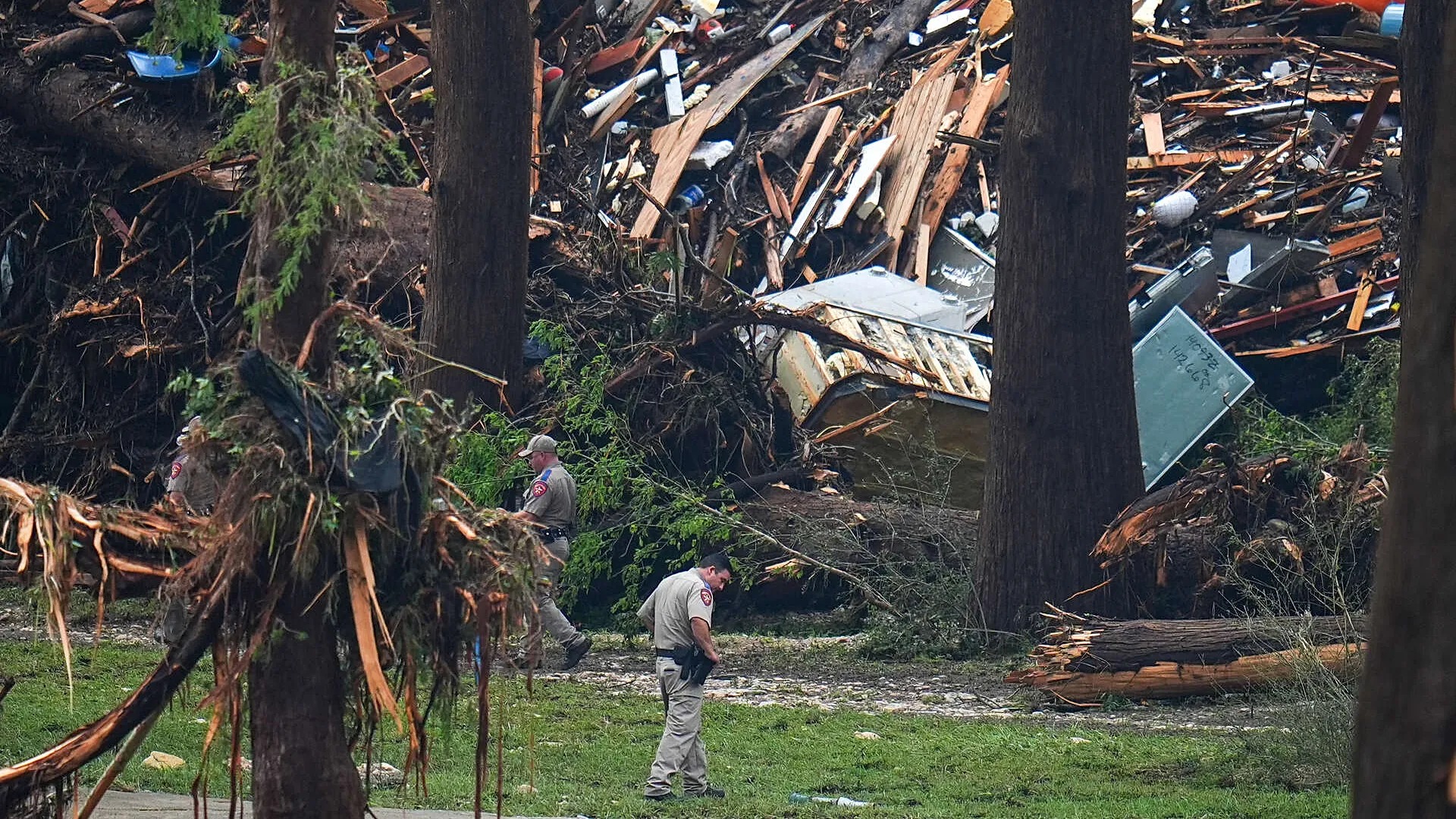
The flooding was triggered by a slow-moving storm system that dumped extreme amounts of rain across the Texas Hill Country, a region located between San Antonio and Austin that is already prone to flash flooding due to its steep terrain and narrow river valleys. Rivers rapidly overflowed their banks, catching many residents off guard as water levels rose with little warning.
One of the hardest-hit locations was a summer camp along the Guadalupe River, where fast-rising floodwaters struck before sunrise. At least 10 children and one counselor remain missing following the disaster.
“100-year flood” label questioned by experts
Authorities have described the disaster as a “100-year flood,” a term used to describe an event statistically expected to occur once in a century. However, scientists and climate experts caution that such terminology may no longer accurately reflect modern risk levels in a changing climate.
The scale of rainfall recorded during the event was extreme. In Kerrville, more than 25 centimeters of rain fell in just three hours, according to AccuWeather. Another storm west of Austin brought nearly 35 centimeters within five hours. In Hunt, Texas, the Guadalupe River surged from around 2 meters to nearly 9 meters in a matter of hours—its second-highest level ever recorded by the National Weather Service.
Climate change intensifying extreme rainfall
Scientists have long warned that global warming is increasing the intensity of extreme weather events, including flash floods. A warmer atmosphere holds more moisture, which can lead to heavier downpours when storm systems develop.
Researchers have linked similar patterns to recent disasters worldwide, including flooding events in Europe and other parts of the United States. Studies have shown that climate change has increased rainfall intensity in many regions, making historically rare storms more likely.
In this case, meteorological conditions over the Gulf of Mexico, including unusually warm water temperatures and remnants of Tropical Storm Barry, combined with weak atmospheric steering winds, helped funnel large amounts of moisture into central Texas. Experts say these factors created conditions that were primed for extreme flooding.
“A warmer atmosphere holds more moisture”
Meteorologists note that the fundamental physics of a warming climate plays a key role in intensifying rainfall. Brett Anderson, a senior meteorologist at AccuWeather, explained that higher global temperatures allow the atmosphere to retain significantly more water vapor, increasing the potential for heavy precipitation events.
Forecasting challenges and emergency response concerns
While the National Weather Service issued multiple warnings ahead of the flooding, including flash flood alerts sent to mobile devices, predicting the exact location and intensity of rainfall remains extremely difficult, especially in slow-moving storm systems where conditions can vary sharply over short distances.
Some officials and residents have questioned whether earlier or clearer warnings could have reduced the loss of life. The disaster has also reignited debate over the capacity of forecasting systems to keep up with increasingly volatile weather patterns.
Concerns have also been raised about staffing and resource constraints within weather services, with reports of reduced operational capacity in some regions. Meteorologists warn that limitations in forecasting infrastructure could make it harder to respond effectively to rapidly developing disasters.
A warning for the future
Experts say the Texas floods are part of a broader trend toward more frequent and severe extreme rainfall events as the climate warms. They warn that infrastructure and emergency preparedness systems may need significant upgrades to cope with a future in which so-called “once-in-a-century” floods could occur far more often.
Shel Winkley, a meteorologist at Climate Central, noted that rainfall patterns are becoming less consistent and more extreme, with storms capable of producing far greater amounts of precipitation in short periods than in the past.
As recovery efforts continue in Texas, scientists emphasize that the disaster serves as a stark reminder of how climate change is reshaping weather risks across the United States and around the world.