
“A Defining Moment”: UN Court Set to Issue Landmark Opinion on Countries’ Climate Responsibilities
The International Court of Justice (ICJ) is expected to deliver a historic advisory opinion on Wednesday that will clarify the legal responsibilities of states in addressing climate change and outline potential consequences for countries whose emissions have contributed to environmental harm.
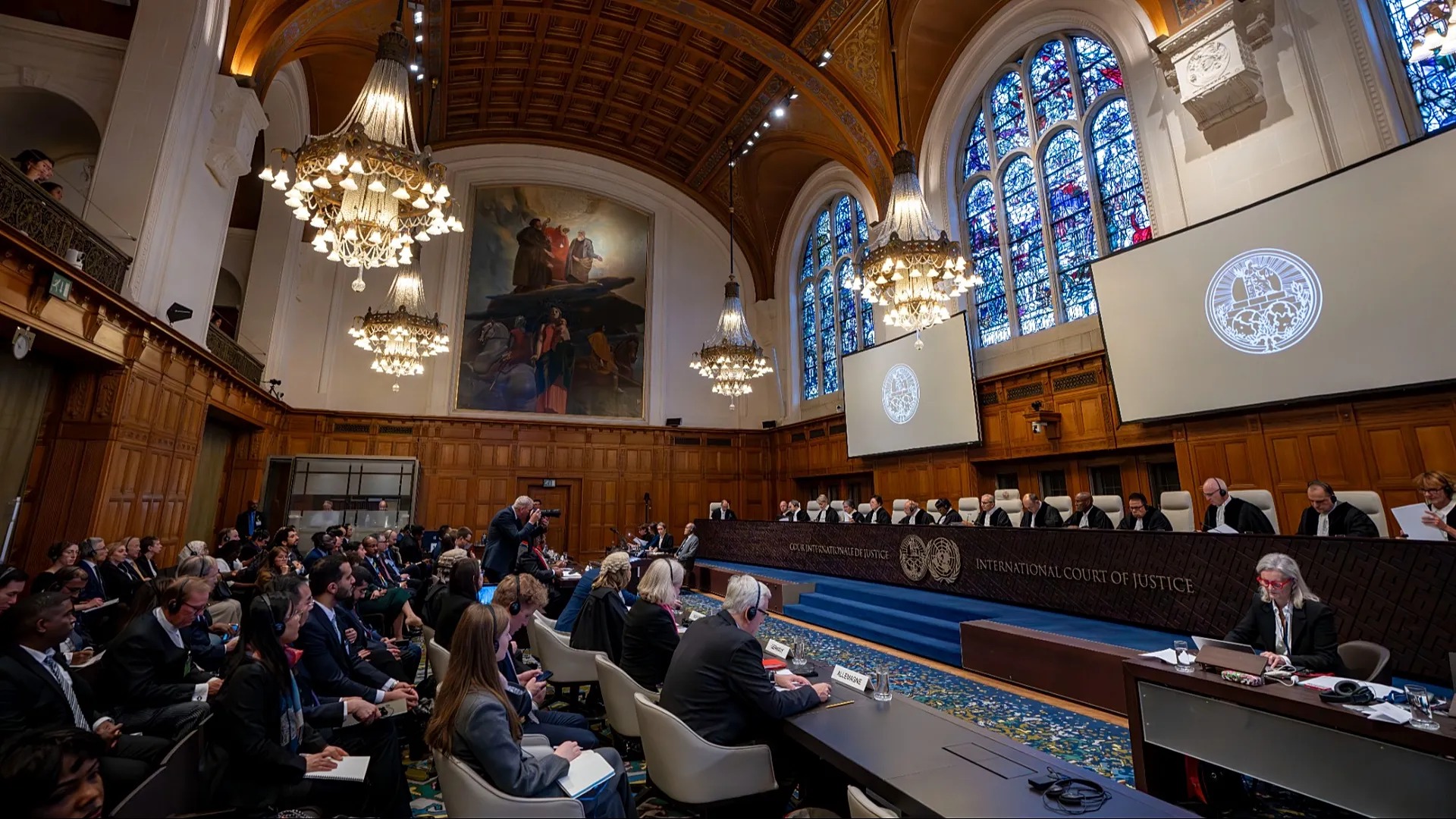
Legal experts describe the forthcoming decision as one of the most important developments in international climate law in recent years, with potential implications for governments, corporations, and global climate negotiations.
A global legal milestone
The case has been described by observers as a “David versus Goliath” struggle, driven largely by vulnerable nations seeking stronger legal foundations for global climate action.
Jotham Napat, Prime Minister of Vanuatu, called the ruling a potential turning point for global climate justice, saying it represents both a legal milestone and a message of hope for future generations affected by climate change.
The advisory opinion follows a long international process that began in 2019, when Pacific Island students launched a campaign urging governments to seek clarification from the ICJ on states’ climate obligations under international law. In March 2023, the United Nations General Assembly formally referred the matter to the court, backed by Vanuatu and more than 130 countries.
Key questions before the court
The ICJ’s panel of 15 judges has been asked to address two central questions: what legal duties states have under international law to protect the climate for present and future generations, and what legal consequences should follow if countries fail to meet those obligations and cause significant environmental harm.
During hearings held in December last year, the court heard arguments from more than 100 countries and organizations, with additional written submissions from around 150 others. This made it the largest climate-related case ever considered by the world’s highest court.
Although ICJ advisory opinions are not legally binding, they carry substantial authority and are often influential in shaping international law and national policy decisions.
Vulnerable nations at the forefront
Pacific Island nations have been among the strongest advocates for the case, arguing that existing international climate agreements have not delivered sufficient action to address the scale of the crisis.
Vanuatu’s government has emphasized that many island states are already experiencing severe climate impacts, including rising sea levels, stronger cyclones, and saltwater intrusion threatening freshwater supplies and agriculture. In some cases, entire communities face the possibility of relocation.
Other Pacific nations have also been forced to consider extreme adaptation measures. In Nauru, for example, authorities have explored innovative financing approaches linked to citizenship programs to support future climate relocation planning.
Prime Minister Napat stressed that the court case seeks to confirm that international law already places obligations on states regarding their climate-related actions, particularly when those actions contribute to harm beyond national borders.
Divided international positions
While vulnerable countries argue that stronger legal clarification is urgently needed, some major emitting nations, including the United States and Russia, have maintained that the existing international framework—particularly the Paris Agreement—is sufficient to guide global climate action and that additional legal standards are unnecessary.
Potential global impact of the ruling
Experts say the ICJ’s opinion could establish a clear legal benchmark for climate responsibility under international law, potentially influencing future climate finance discussions, emissions reduction commitments, and negotiations at major global summits such as COP30 in Brazil.
The ruling could also have far-reaching effects beyond diplomacy. Legal scholars suggest it may serve as a reference point for national courts handling climate-related lawsuits, potentially strengthening legal actions brought by citizens against governments or between states themselves.
Supporters of the case argue that a strong ruling could accelerate funding for climate loss and damage, increase pressure for more ambitious emissions targets, and reinforce accountability in international climate governance.
Vanuatu officials have stated that the opinion could help shift global climate policy from voluntary commitments toward enforceable responsibility, providing legal backing for vulnerable nations seeking financial, technological, and humanitarian support.
As the world awaits the court’s decision, many observers see the case as a defining moment in the evolving intersection between international law and climate action.