
Climate Change as a Human Rights Crisis: Rising Impacts Expose Global Inequalities
As the consequences of climate change intensify worldwide, experts and policymakers are increasingly recognising that the crisis extends beyond environmental damage—it is also a profound threat to human rights.
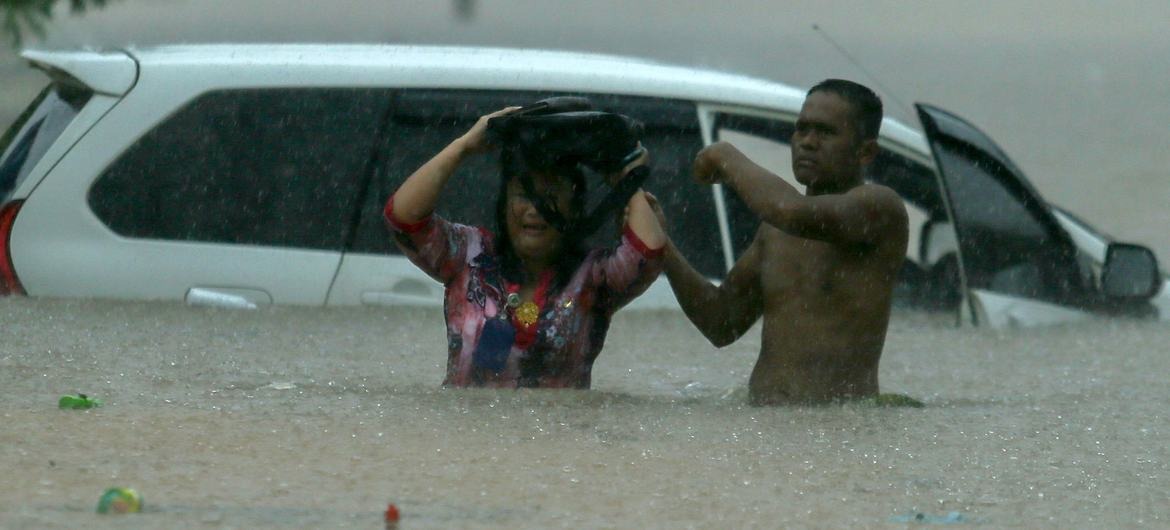
Earlier this year in Geneva, UN High Commissioner for Human Rights Volker Türk raised urgent concerns at the Human Rights Council, questioning whether governments are doing enough to protect people from the growing risks posed by climate change. His conclusion was clear: current efforts fall far short of what is needed.
Climate change and human rights
Specialists argue that climate change must be understood not only as an environmental emergency but also as a violation of fundamental human rights. Professor Joyeeta Gupta, co-chair of the Earth Commission and a senior UN adviser on sustainable development, stressed that the impacts of global warming directly affect people’s ability to live safely and securely.
She pointed out that early climate agreements, such as the 1992 convention, failed to fully account for human harm. Even the Paris Agreement’s goal of limiting warming to 1.5°C—though safer than 2°C—still represents a compromise that may not be sufficient for the most vulnerable nations.
For small island states, even modest increases in temperature can be catastrophic. Rising sea levels, stronger storms and saltwater intrusion threaten to wipe out entire countries. According to Gupta, even 1.5°C of warming remains dangerous, while anything beyond that significantly escalates risks.
Her research suggests that a temperature rise of just 1°C already pushes conditions beyond a “just” limit, potentially infringing on the rights of over 100 million people. The world surpassed this level in 2017 and is expected to exceed 1.5°C within the next decade.
She warned that future promises of reducing temperatures cannot reverse irreversible damage such as melting glaciers, ecosystem collapse and loss of life.
Inequality and responsibility
Climate justice is closely linked to development and inequality. Basic human needs—such as access to food, water, housing and energy—require resources that also generate emissions.
Gupta highlighted that wealthier nations must take greater responsibility by cutting emissions more aggressively. Without this, poorer countries are denied the opportunity to develop while also facing the harshest impacts of climate change.
Failing to address this imbalance, she argued, turns inequality into injustice.
Climate-driven displacement
One of the clearest consequences of climate change is displacement. However, international law still does not formally recognise people forced to move due to climate impacts as “climate refugees.”
Gupta explained that displacement often follows a gradual process: communities first adapt, then absorb losses, and eventually are forced to relocate when survival becomes impossible.
Most displacement currently occurs within national borders rather than across countries. However, proving that climate change is the primary cause remains legally complex. Advances in attribution science—which links environmental changes to specific causes—may help address this challenge in the future.
Legal gaps and emerging progress
The fragmented nature of international law has made it difficult to address climate-related human rights violations. Environmental agreements, human rights treaties and economic frameworks often operate separately, allowing governments to avoid accountability.
However, this is beginning to change. In a landmark development, the International Court of Justice (ICJ) recently clarified that climate obligations must be considered alongside human rights responsibilities. This ruling signals a shift toward integrating environmental and human rights law.
Legal strategies are also evolving globally, with cases targeting corporations and governments for their role in climate harm. Attribution science is playing a growing role in linking emissions to specific damages.
A global and collective challenge
Climate change is inherently transboundary, meaning its effects cross national borders. This makes assigning responsibility more complex but also underscores the need for collective action.
Gupta emphasized that climate stability itself should be recognised as a shared human right, as it underpins essential systems such as agriculture, water supply and economic stability. Without it, societies cannot function effectively.
Courts around the world are increasingly acknowledging that climate disruption undermines existing human rights, even if a formal “right to climate stability” is not yet universally defined.
Eroding rights and the need for action
Volker Türk warned that climate change is already undermining fundamental rights, particularly for vulnerable populations. At the same time, he framed climate action as an opportunity to create more equitable and sustainable societies.
He called for a “just transition” away from environmentally harmful systems, ensuring that no one is left behind.
Experts also point to political challenges. Weakening international cooperation and continued expansion of fossil fuel production—especially among wealthy nations—are slowing progress.
Gupta argued that addressing climate change requires strong governance, global cooperation and systemic change, rather than reliance on market-driven solutions alone.
Ultimately, the message from both scientists and UN officials is clear: climate change is not just about the planet—it is about people.
Without urgent and coordinated action, the erosion of rights, livelihoods and futures will continue to accelerate.