
Climate Change Puts Europe’s Underwater Heritage at Risk of Irreversible Damage
Climate change is increasingly threatening Europe’s marine environments, and its impact is extending beyond ecosystems to endanger submerged cultural heritage sites.
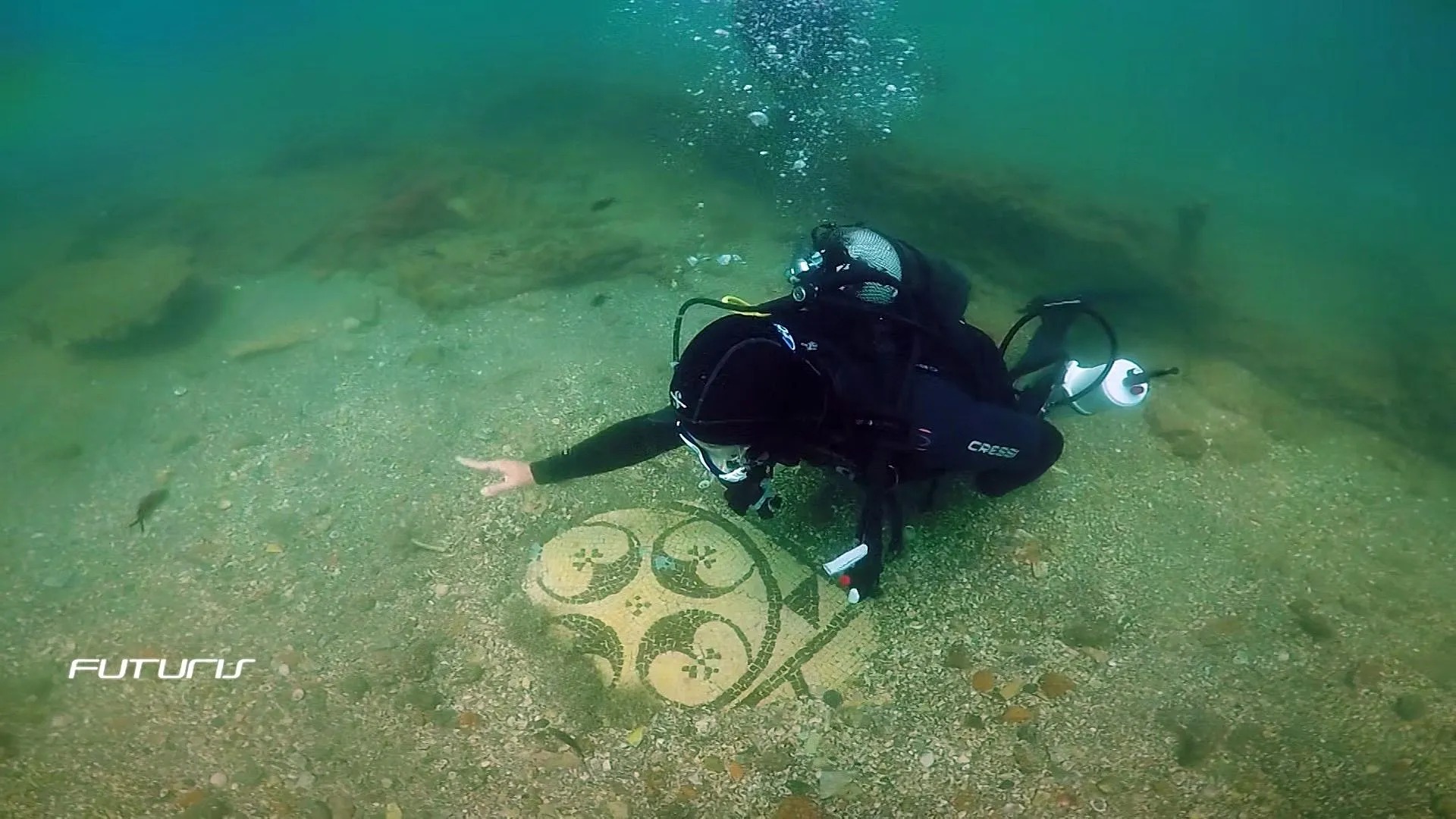
A recent study highlights how ocean acidification is accelerating the deterioration of underwater archaeological remains, raising concerns about the long-term preservation of historically significant artefacts.
Led by researchers at the University of Padua, the study examines how declining pH levels in ocean water—caused by rising carbon dioxide emissions—affect materials commonly found in ancient submerged structures.
Acidification accelerates decay
Scientists found that as ocean acidity increases, it speeds up both chemical dissolution and biological degradation of archaeological materials. While such damage was minimal before the industrial era and remains relatively limited today, projections indicate a sharp rise in deterioration rates under future climate scenarios.
According to lead researcher Luigi Germinario, these changes could become irreversible over the coming decades and even centuries. The process is influenced not only by the chemical composition of materials but also by biocolonisation—the growth of microorganisms on submerged surfaces—which further accelerates decay.
The findings, published in Communications Earth & Environment, stress that ocean acidification presents a serious challenge for protecting underwater cultural heritage and demands urgent conservation strategies.
Natural ‘laboratories’ reveal future risks
To better understand how acidification affects materials, researchers conducted field experiments in the waters surrounding Ischia. This area contains natural carbon dioxide vents created by volcanic activity, offering real-world conditions that mimic future ocean scenarios.
By placing stone samples near these CO₂ vents, the team exposed them to varying levels of acidity. This allowed scientists to observe how materials respond under different pH conditions, including extreme environments expected in the future.
Back in the laboratory, advanced imaging techniques were used to analyse surface changes in the samples. High-resolution tools helped researchers measure erosion and dissolution in detail, providing insights into how submerged artefacts may degrade over time.
Vulnerable materials and cultural loss
The study found that materials rich in calcium carbonate—such as marble and limestone—are particularly vulnerable to acidification. These substances share similarities with coral, which is already known to be highly sensitive to changes in ocean chemistry.
Artefacts with fine details, including sculptures, engravings and mosaics, face the greatest risk. Even slight surface damage can result in the permanent loss of historical and artistic information.
Among the sites potentially affected is the Baia Archaeological Park, an underwater complex featuring remnants of an ancient Roman city, including intricate mosaics and marble floors. Other locations, such as the Roman port of Egnazia in southern Italy, may also be at risk.
A growing challenge for conservation
Researchers warn that protecting these submerged cultural assets will become increasingly difficult as ocean conditions continue to change. Unlike visible heritage sites, underwater remains are harder to monitor and preserve, making them particularly vulnerable.
The study underscores that even minor degradation can have significant consequences, as it may erase details that are crucial for understanding historical contexts.
As climate change continues to alter ocean chemistry, experts stress the urgency of developing new conservation methods and policies to safeguard Europe’s underwater heritage before the damage becomes irreversible.