
Climate Crisis Should Be Addressed Without “Degrowth” Policies, Says EU Lawmaker
At the Brussels Economic Forum, Member of the European Parliament Lídia Pereira argued that Europe must continue pursuing climate action without adopting “degrowth” strategies, stressing that economic growth remains essential for maintaining the European way of life.
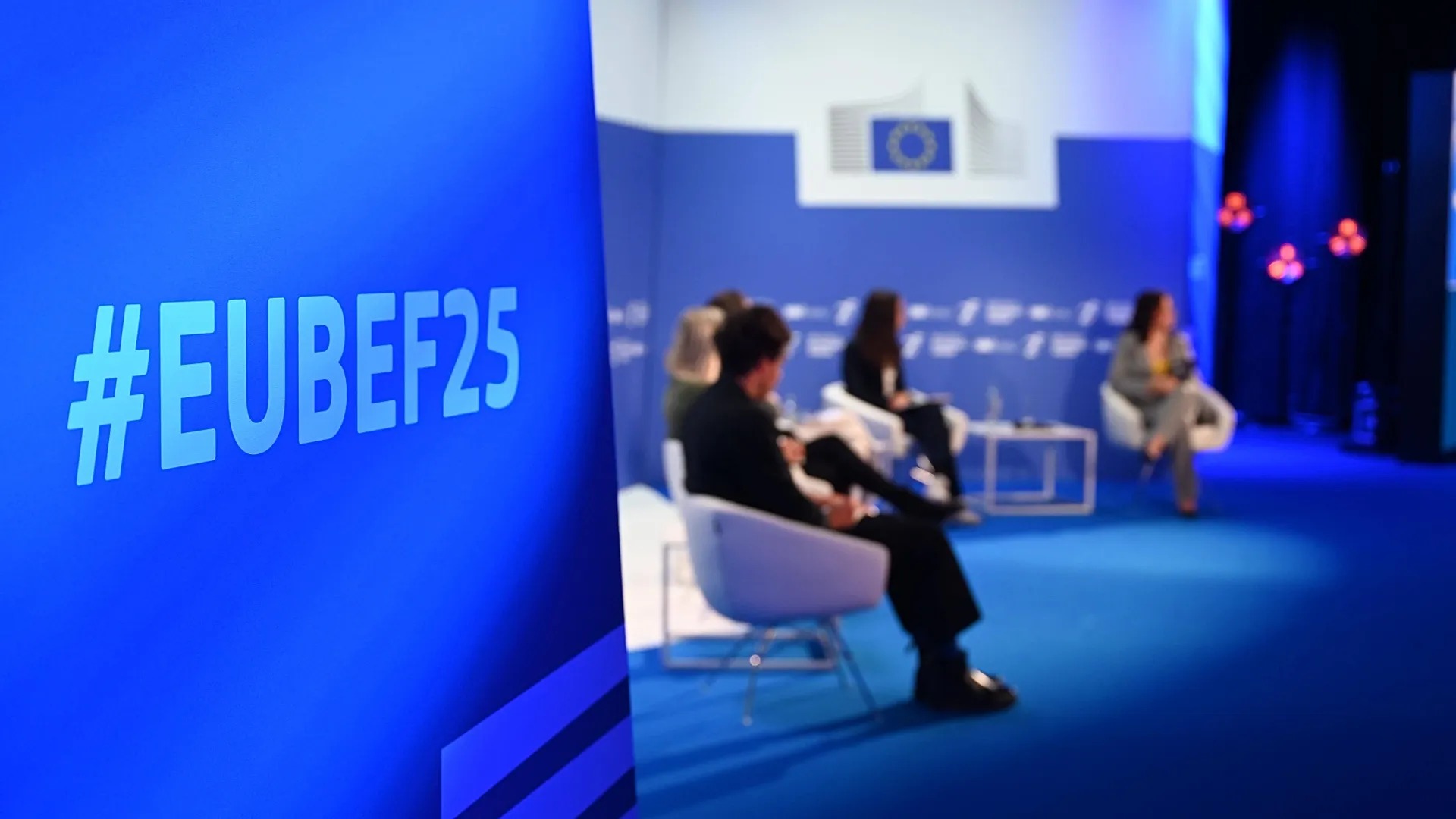
During a panel titled “Navigating a turbulent world – securing Europe’s economy”, Pereira stated that the European Union serves as a “beacon of stability” in global climate policy and warned against what she described as “dangerous” approaches to tackling the climate crisis. She emphasized that effective solutions should be developed through cooperation with moderate political actors rather than radical economic shifts.
Her comments came in response to proposals advocating degrowth made by economist Timothée Parrique of HEC Lausanne. Parrique argued that his position is not a political ideology but a scientific interpretation of current environmental and economic realities. He claimed that continuing to prioritize growth is increasingly incompatible with improving quality of life, adding that wealth distribution and environmental impacts remain deeply unequal and insufficiently addressed.
Degrowth theory, which has existed since the 1970s, challenges the idea of continuous economic expansion and instead promotes reducing overall consumption and production. Supporters believe that finite global resources make perpetual growth unsustainable, while critics argue that such an approach could severely disrupt the global economic system, potentially increasing unemployment and inequality while proving politically difficult to implement.
Parrique acknowledged these concerns but maintained that the cost of inaction on climate change would be significantly higher than the cost of implementing strong environmental measures. He also called for greater public awareness and more open discussion of long-term environmental risks within economic policymaking.
In response, Pereira argued that environmental transition policies can and should be aligned with economic competitiveness. She pointed to large-scale industrial support measures in the United States and China, including former U.S. President Joe Biden’s Inflation Reduction Act, as examples of how other global powers are investing heavily in clean technologies.
She stressed that Europe must strengthen its “strategic autonomy” in clean energy and green technologies in order to remain competitive internationally. According to her, one of the key barriers is the lack of a fully integrated European capital market, which limits companies’ ability to access cross-border financing and makes them more dependent on traditional bank lending instead of broader private investment networks.
The European Union remains committed to achieving climate neutrality by 2050, with member states developing national strategies to meet this goal. Pereira suggested that Europe could position itself as a global leader by successfully combining climate ambition with economic growth, especially at a time when other major economies are reassessing their approach to climate policy.
This discussion also comes amid shifting policy directions in the United States, where the administration has reduced support for green transition initiatives. Former President Donald Trump has again withdrawn the U.S. from the Paris Climate Agreement and has prioritized fossil fuel development while scaling back elements of previous clean energy investment policies.