
COP30: Global leaders criticise Trump over lack of climate action
World leaders have sharply criticised Donald Trump over his stance on climate change ahead of the COP30 summit, highlighting deep divisions in global climate politics.
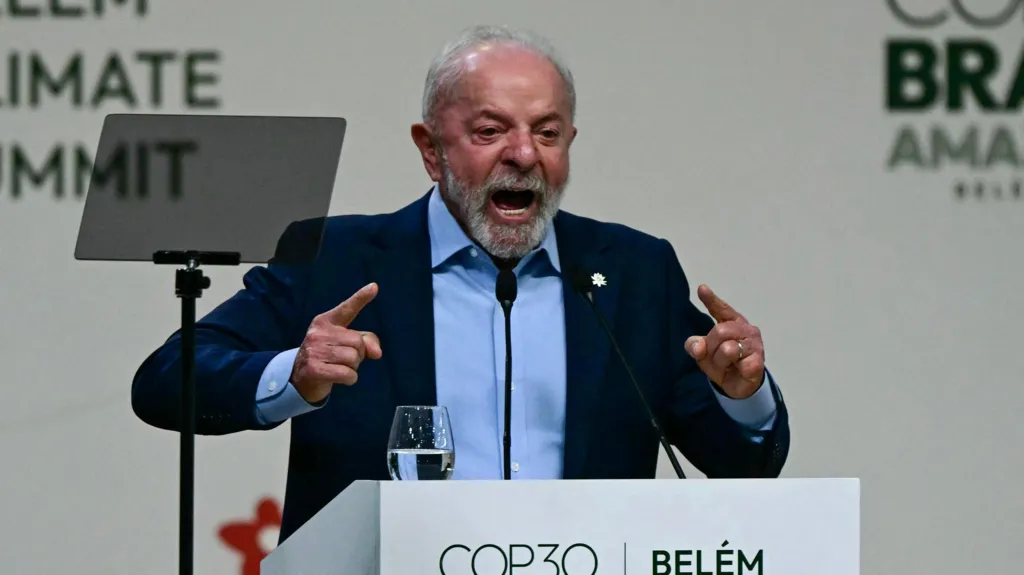
Although Trump is not attending the gathering in Belém, Brazil, his influence looms large over the discussions. Leaders from Chile and Colombia openly condemned his rejection of climate science, with some accusing him of spreading misinformation.
Speaking ahead of the summit, Trump reiterated his long-held position, previously describing climate change as “the greatest con job ever perpetrated on the world.” His remarks have drawn strong backlash from leaders who argue that such rhetoric undermines global efforts to address a growing crisis.
Brazilian President Luiz Inácio Lula da Silva warned against what he called “extremist forces” spreading false narratives about climate change, cautioning that such actions risk condemning future generations to a severely altered planet.
Meanwhile, UK Prime Minister Keir Starmer acknowledged that international unity on climate action is weakening. He noted that while climate policy once enjoyed broad consensus, that agreement is now eroding both globally and domestically.
The COP30 summit, held under the United Nations framework, will see countries negotiate new climate commitments over the coming weeks, with a strong focus on financing forest protection initiatives. However, the absence of several major emitters—including the United States, China, India, and Russia—has raised concerns about the effectiveness of the talks.
Progress has already been hampered by limited participation and a lack of updated national plans to reduce emissions. Disagreements have also emerged over funding mechanisms. In a notable setback for the host nation, the UK declined to join a proposed $125 billion rainforest protection fund, despite previously supporting similar initiatives.
The fund, championed by Brazil, aims to support conservation efforts in critical ecosystems such as the Amazon and the Congo Basin—regions that play a vital role in absorbing carbon dioxide and preserving global biodiversity.
The decision has sparked frustration among some stakeholders. Zac Goldsmith expressed disappointment, noting that expectations had been high for strong UK backing.
In contrast, Prince William voiced support for the initiative, calling it a “visionary step” and emphasizing the importance of protecting natural systems in the fight against climate change.
As negotiations begin, leaders face mounting pressure to deliver concrete outcomes, particularly on climate finance for vulnerable nations already experiencing severe impacts. Recent extreme weather events—including powerful hurricanes and widespread flooding—have underscored the urgency of coordinated global action.
Despite strong rhetoric and growing concern, the summit highlights the widening gap between political positions and the unified response scientists say is needed to address the accelerating climate crisis.