
Europe Faces Over €790 Billion in Climate-Related Economic Losses Since 1980, Study Finds
Europe has recorded more than €790 billion in economic damage caused by extreme weather and climate-related events between 1980 and 2023, according to a recent report from the European Environment Agency (EEA).
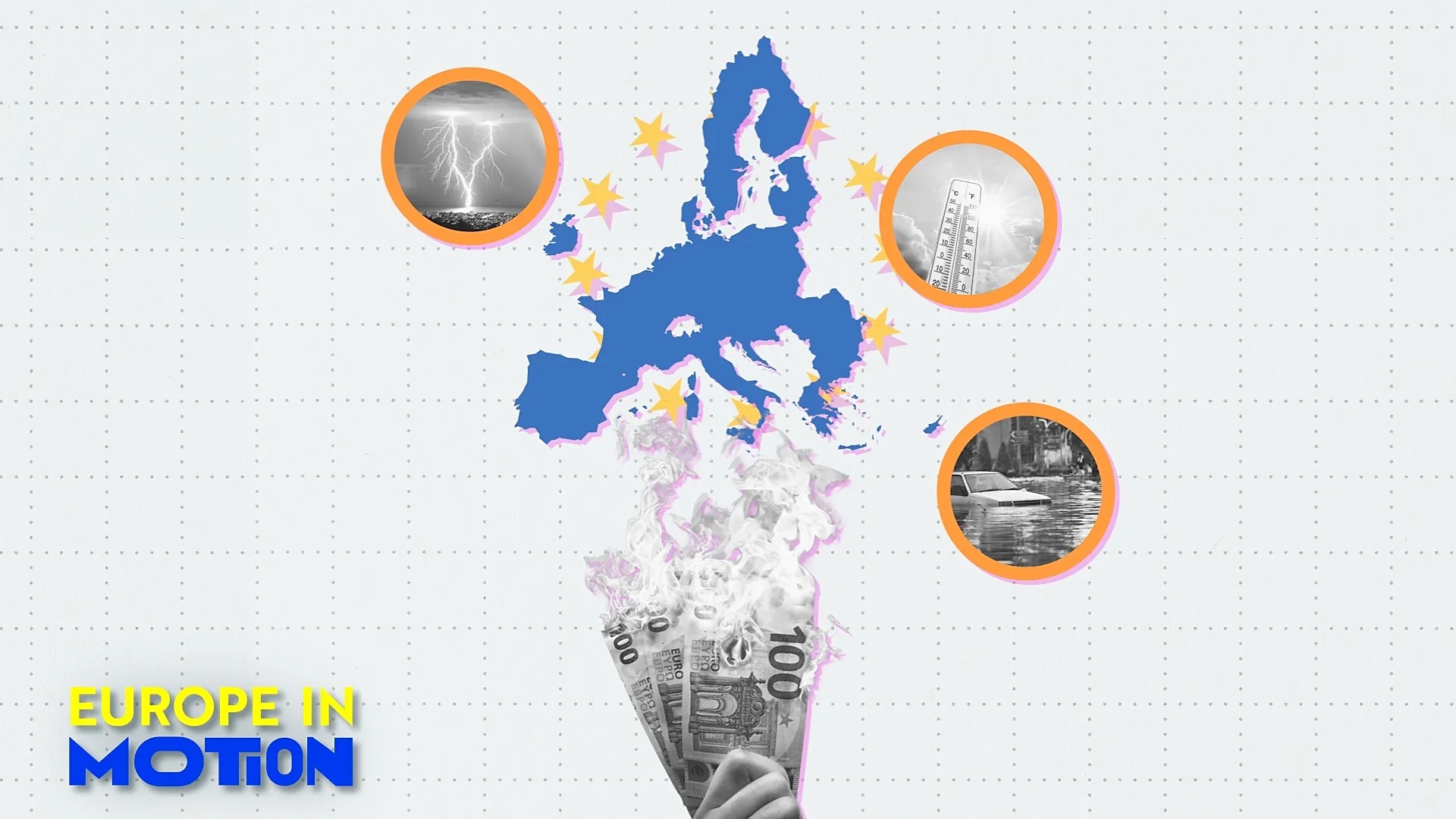
The data highlights the growing financial toll of climate-related disasters across the continent, particularly as Europe continues to experience more frequent and severe heatwaves, floods, storms, and wildfires.
Among European countries, Germany has suffered the highest total economic losses, with damages estimated at around €180 billion over the period. It is followed by Italy, which recorded losses of approximately €135 billion, while France experienced around €130 billion in damages. Spain ranks fourth, with total losses reaching about €97 billion.
However, the distribution changes when focusing specifically on the 21st century. In more recent decades, Germany, Italy, France, and Spain remain among the most heavily affected countries. They are followed closely by a group of EU states including Austria, Belgium, Czechia, Portugal, Romania, and Slovenia, which each reported relatively similar total losses ranging between €12 billion and €15 billion.
The Intergovernmental Panel on Climate Change (IPCC) has previously stated that both the frequency and intensity of extreme weather events have increased in several parts of Europe, and are expected to rise further as global temperatures continue to climb.
According to the EEA, the most damaging events across the European Union are floods and heatwaves, which account for a large share of total economic losses.
The report also notes that while absolute financial losses tend to be higher in wealthier and more industrialised countries, their overall economic impact is often less severe compared to poorer nations, where even smaller-scale disasters can significantly affect national economies and recovery capacity.
Differences in exposure and geography also play a key role. Countries in Western and Central Europe such as Germany, Belgium, and Slovenia tend to experience higher losses per square kilometre, whereas nations in Northern and Eastern Europe, including Finland and Estonia, generally report lower financial impacts.
On a per capita basis, Slovenia records the highest losses in Europe, with an average of €8,733 per person between 1980 and 2023. It is followed by Luxembourg (€2,694), Switzerland (€2,685), Italy (€2,330), and Spain (€2,279). At the lower end of the scale, Kosovo (€10), Montenegro (€41), and Iceland (€87) report the smallest losses per person.
The EEA report also highlights the role of climate risk insurance in Europe. Most countries have some form of private insurance coverage for natural disasters, which helps reduce the financial burden on governments, businesses, and households by enabling faster recovery after extreme events.
In France and Spain, for example, public-private insurance systems are in place through institutions such as the Caisse Centrale de Réassurance (CCR) and the Consorcio de Compensación de Seguros (CCS). Despite these frameworks, the report notes that at least 16 EU member states still have insurance protection gaps exceeding 90%, meaning the vast majority of climate-related losses remain uninsured.
Only Denmark stands out as a country where more than half of climate-related losses are covered by insurance.