
Extreme Weather Sweeps Europe After Heatwave, Raising Questions Over Climate Change’s Role
Europe has been hit by a wave of extreme weather in recent weeks, with intense heatwaves followed by violent storms and widespread wildfires across several regions.
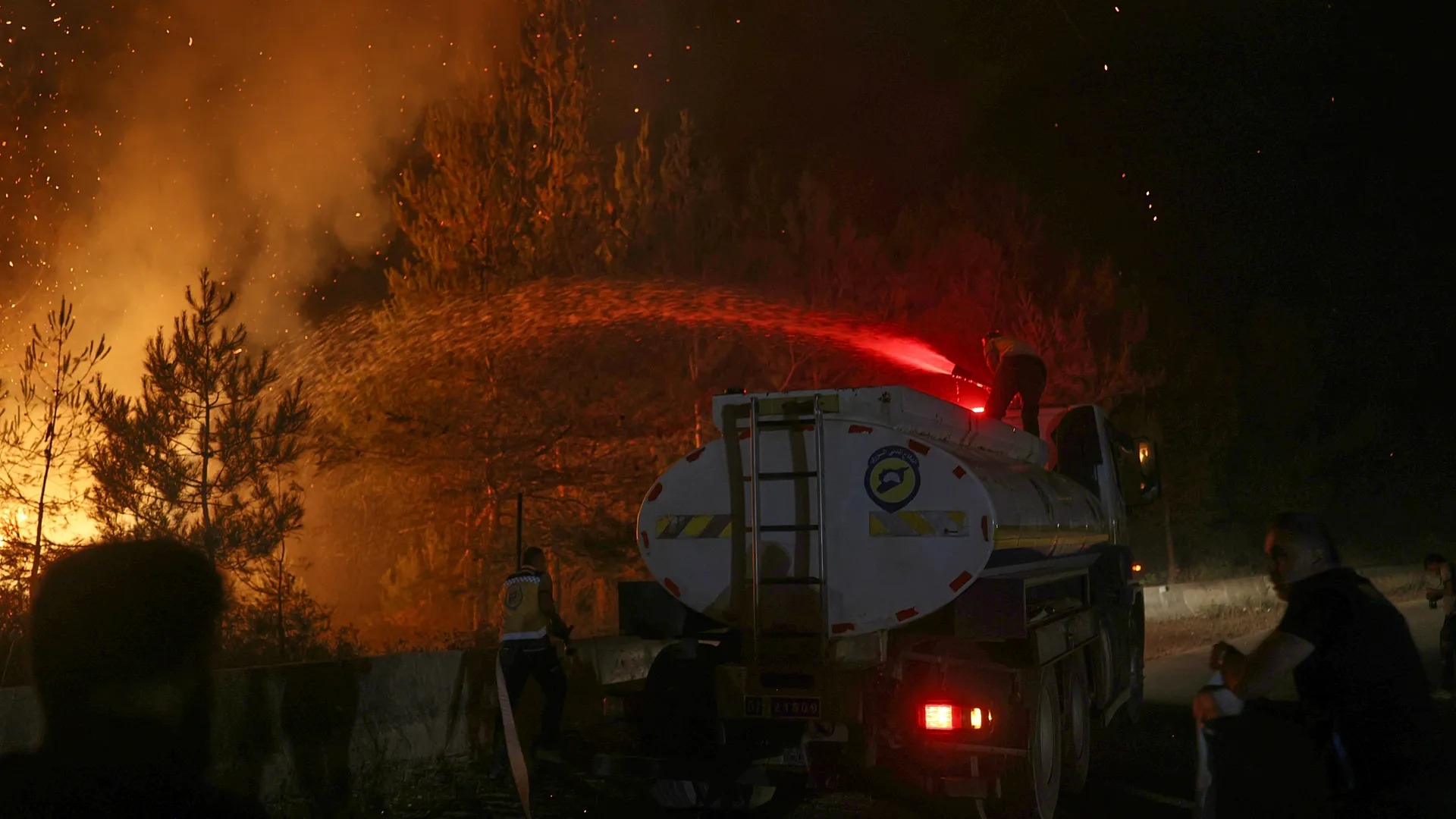
From the Balkans to the Mediterranean, countries including Türkiye, Greece, Spain and France have faced a combination of destructive fires and severe storms in a short span of time.
Scientists say many of these rapidly shifting weather patterns are linked, at least in part, to human-driven climate change. As global temperatures continue to rise, such events are expected to become more frequent, more intense and more damaging.
Experts warn that Europe is likely to experience continued “weather whiplash” this summer, alternating between prolonged droughts and sudden heavy rainfall.
“These events highlight how volatile Europe’s climate is becoming,” said the European Environment Agency, stressing the need for both adaptation measures and rapid emission reductions.
Wildfires spread across southern Europe
In southern France, wildfires have advanced dangerously close to the port city of Marseille. More than 1,000 firefighters have been deployed to contain the blaze, which started near Les Pennes-Mirabeau and has already burned around 720 hectares.
Authorities reported evacuations of hundreds of homes, while airport operations and rail services have been severely disrupted.
According to climate researcher Max Dugan-Knight, the immediate ignition source may have been accidental, but the broader conditions tell a different story.
He explained that extreme heat, dry vegetation and strong winds have created an environment where even minor sparks can quickly escalate into major fires.
Similar conditions have been observed elsewhere. In Türkiye, wildfires in the Izmir region were reportedly triggered by faulty power lines, but were intensified by high temperatures, low humidity and powerful winds.
Fires also erupted along the Turkish-Syrian border, where Raed al-Saleh described the destruction as “extremely tragic,” noting that vast forest areas had been lost.
Meanwhile, in Greece, thousands of tourists were evacuated from parts of Crete as fires swept through forests and olive groves. Another blaze broke out near Athens during a period of temperatures approaching 40°C.
Climate-driven ‘whiplash’ intensifies risks
Scientists are increasingly pointing to a phenomenon known as “hydroclimate whiplash” — rapid swings between wet and dry conditions — as a key factor behind these events.
Periods of heavy rainfall encourage vegetation growth, which then dries out quickly during heatwaves, creating highly flammable conditions.
Dugan-Knight noted that climate change is amplifying both sides of this cycle, making wildfires more likely and more destructive.
He also warned of a feedback loop, where emissions from fires further contribute to global warming, increasing the likelihood of future disasters.
Storms batter the Balkans after extreme heat
At the same time, southeastern Europe has been dealing with violent storms following intense heat.
In Croatia, a powerful hailstorm struck shortly after temperatures reached 40°C, damaging buildings, uprooting trees and flooding streets. Several people were injured as a result.
Meteorologists say such storms often follow prolonged periods of extreme heat, as unstable atmospheric conditions build.
Neighbouring Slovenia experienced similarly erratic weather, with heavy rain and hail across much of the country, while snowfall was reported at higher elevations in the Alps.
The storm system later moved into Serbia, which had already been struggling with severe drought. Earlier in the week, firefighters responded to more than 600 wildfires, and water shortages have raised concerns about agriculture and public supply.
Growing risks across Europe
These events reflect broader findings from the European climate risk assessment, which identified dozens of threats to the continent’s infrastructure, ecosystems, economy and public health.
According to the European Environment Agency, many of these risks have already reached critical levels.
Without urgent action, the agency warns that heatwaves alone could claim hundreds of thousands of lives, while economic damage from coastal flooding could surpass €1 trillion annually under high-emission scenarios.
As Europe continues to experience increasingly volatile weather, scientists emphasise that both mitigation and adaptation efforts will be crucial to limit the scale of future impacts.