
Failure to Act on Climate Change Could Slash Global GDP by Half, New Report Warns
A new report has cautioned that the global economy could shrink by as much as 50 percent if governments fail to take urgent and decisive action against climate change.
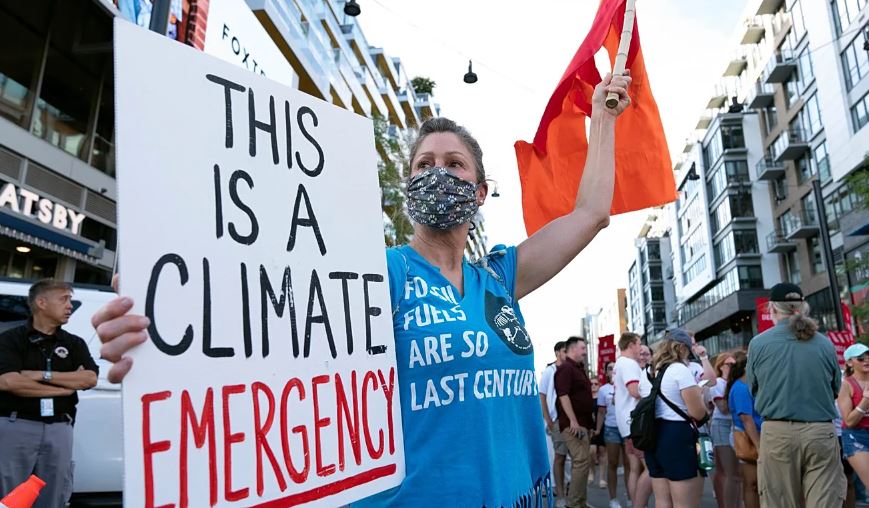
The study, published by the Institute and Faculty of Actuaries (IFoA) in collaboration with the University of Exeter, highlights the severe economic risks posed by a warming planet. Titled “Planetary Solvency – Finding Our Balance with Nature,” the report urges policymakers to accelerate efforts to address the climate crisis before its impacts become unmanageable.
The warning comes shortly after data from the EU’s Copernicus Climate Change Service confirmed that global temperatures exceeded the 1.5°C threshold for the first time in 2024—surpassing a key target set under international climate agreements.
According to the report, the consequences of climate change are already being felt worldwide, with disruptions to food systems, increasing water shortages, rising heat stress, and the spread of infectious diseases. Without intervention, these pressures could escalate into widespread mortality, large-scale displacement, economic decline, and heightened conflict.
Scientists have long warned that surpassing the 1.5°C limit risks triggering critical “tipping points” in Earth’s systems—irreversible changes that could amplify extreme weather and environmental instability.
“An economy cannot function without a stable society, and society depends on a livable environment,” said Sandy Trust, lead author of the report. He emphasized that natural systems underpin human survival and economic activity by providing essential resources such as food, water, air, energy, and raw materials.
The report argues that the cost of inaction already exceeds the investment required to limit global warming to 2°C, suggesting that strong climate measures would deliver net economic benefits over time.
Flawed Economic Models Underestimate the Risks
The IFoA also criticized widely used economic models for significantly understating the true financial impact of climate change. Many existing assessments, the report claims, focus on isolated risks and fail to account for how multiple threats can interact and compound one another.
To illustrate this, the report compares current approaches to analyzing the Titanic disaster without considering the possibility of the ship sinking or the consequences for passengers.
One example cited is a long-standing estimate suggesting that a 3°C rise in global temperatures would reduce GDP by only 2 percent by 2100—an assessment the authors argue has misled policymakers and contributed to insufficient climate action.
By contrast, the report’s risk-based analysis projects a far more severe outcome, with global GDP potentially contracting by half between 2070 and 2090 if current policies remain unchanged.
Growing Evidence of Economic Damage
Other recent studies have reached similar conclusions about the financial toll of climate change. Research from the National Bureau of Economic Research indicates that each 1°C increase in global temperature could reduce global GDP by approximately 12 percent.
Economist Adrien Bilal of Harvard University, who co-authored the study, noted that while economic growth may continue, living standards could decline significantly. By the end of the century, people could be up to 50 percent poorer than they would have been without climate change.
The World Bank has also highlighted the mounting economic costs of extreme weather. Between 1980 and 2022, climate-related events caused an estimated €650 billion in damages across Europe alone—averaging more than €15 billion annually.
However, the institution warns that current financial mechanisms are insufficient to handle multiple large-scale disasters occurring within the same year. Funding gaps for major events such as floods or earthquakes can reach tens of billions of euros, leaving little capacity to respond to additional crises like wildfires or droughts.
Further research by the Network for Greening the Financial System (NGFS) shows that projected global losses from long-term climate risks could be two to four times higher by 2050 than previously estimated.
Experts say that inadequate climate policies are creating a dangerous cycle: delayed action increases the cost of future interventions, which in turn makes them harder to implement, leading to further emissions and greater damage.
“The evidence is clear that climate change is becoming a central driver of economic risk,” said Livio Stracca of the European Central Bank. “Without stronger policy action, the financial and social consequences will continue to intensify.”