
Fake Experts and Emotional Manipulation: How to Recognise Climate Disinformation in 2026
As climate change becomes more urgent, the spread of misleading information online is also intensifying, prompting the European Union to step up its efforts to combat disinformation.
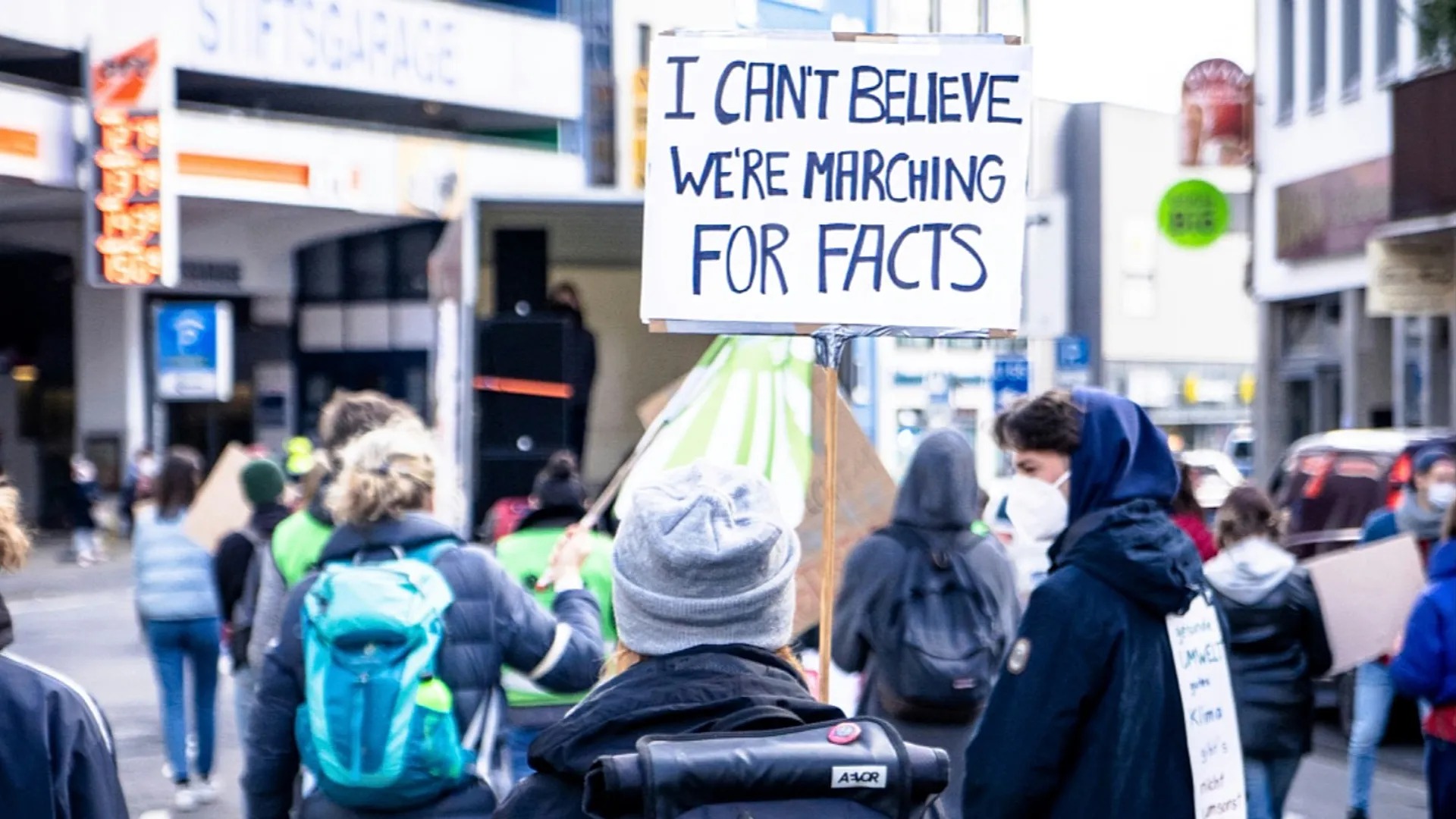
The EU has endorsed a major international initiative aimed at tackling false narratives around climate issues. Introduced during the COP30 in Belém, the Declaration on Information Integrity on Climate Change signals a strong commitment to promoting scientific accuracy, evidence-based policymaking and informed public debate.
Before receiving EU-wide backing in January 2026, the declaration had already been supported by several member states, including Belgium, Germany and Spain.
This initiative comes at a time when navigating environmental information has become increasingly complex. According to recent Eurobarometer data, more than half of Europeans believe traditional media does not clearly explain climate issues, while nearly half say they struggle to identify trustworthy content on social media platforms.
Understanding climate disinformation
Climate disinformation refers to the deliberate creation and spread of false or misleading claims about climate change and related policies. This can include outright denial of climate science, conspiracy theories or distorted interpretations of data.
It differs from misinformation, which involves inaccurate or misleading information shared without the intent to deceive.
Wopke Hoekstra warned that the growing presence of disinformation poses a serious threat to effective climate action.
He emphasised that meaningful progress depends on informed discussions grounded in scientific evidence rather than misinformation or polarised narratives.
Tools to identify misleading content
To address the issue, the European Commission’s climate department has launched the #ClimateFactsMatter campaign, designed to help individuals recognise and challenge misleading information online.
The initiative highlights several common tactics used in climate disinformation:
Selective use of data
Misleading content often relies on cherry-picked statistics to distort reality. Experts advise consulting multiple credible sources to gain a more complete understanding of climate-related issues.
Fake or misleading experts
Online platforms make it easy for individuals to present themselves as authorities without proper credentials. Investigations have shown that hundreds of articles have cited non-existent or AI-generated experts. Verifying sources is essential to avoid being misled.
Emotional manipulation
Disinformation frequently uses emotionally charged language to provoke fear or anger. Experts recommend pausing and verifying claims before reacting to content that triggers strong emotions.
Oversimplified solutions
Climate change is a complex global challenge requiring systemic transformation. Claims that present quick or easy fixes should be approached with caution, as they often oversimplify or misrepresent reality.
AI-generated content
Advances in artificial intelligence have made it easier to produce convincing fake images and videos. Users are encouraged to examine details closely, perform reverse image searches and rely on trusted fact-checking organisations.
Strengthening public awareness
Efforts to counter climate disinformation are increasingly seen as a key part of climate policy itself. By improving public understanding and trust in scientific information, authorities hope to build stronger support for climate action.
Media organisations, including Euronews, have also expanded their fact-checking initiatives to address false claims and misleading narratives circulating across Europe.
As digital content continues to evolve, experts stress that critical thinking and source verification will be essential tools in navigating the growing volume of climate-related information online.