
From fuel-burning tanks to raging wildfires: Russia’s war in Ukraine fuels environmental devastation
Experts warn that the war in Ukraine is not only a humanitarian and geopolitical crisis but also a growing environmental disaster, with climate change and armed conflict reinforcing each other in what they describe as a “vicious cycle.”
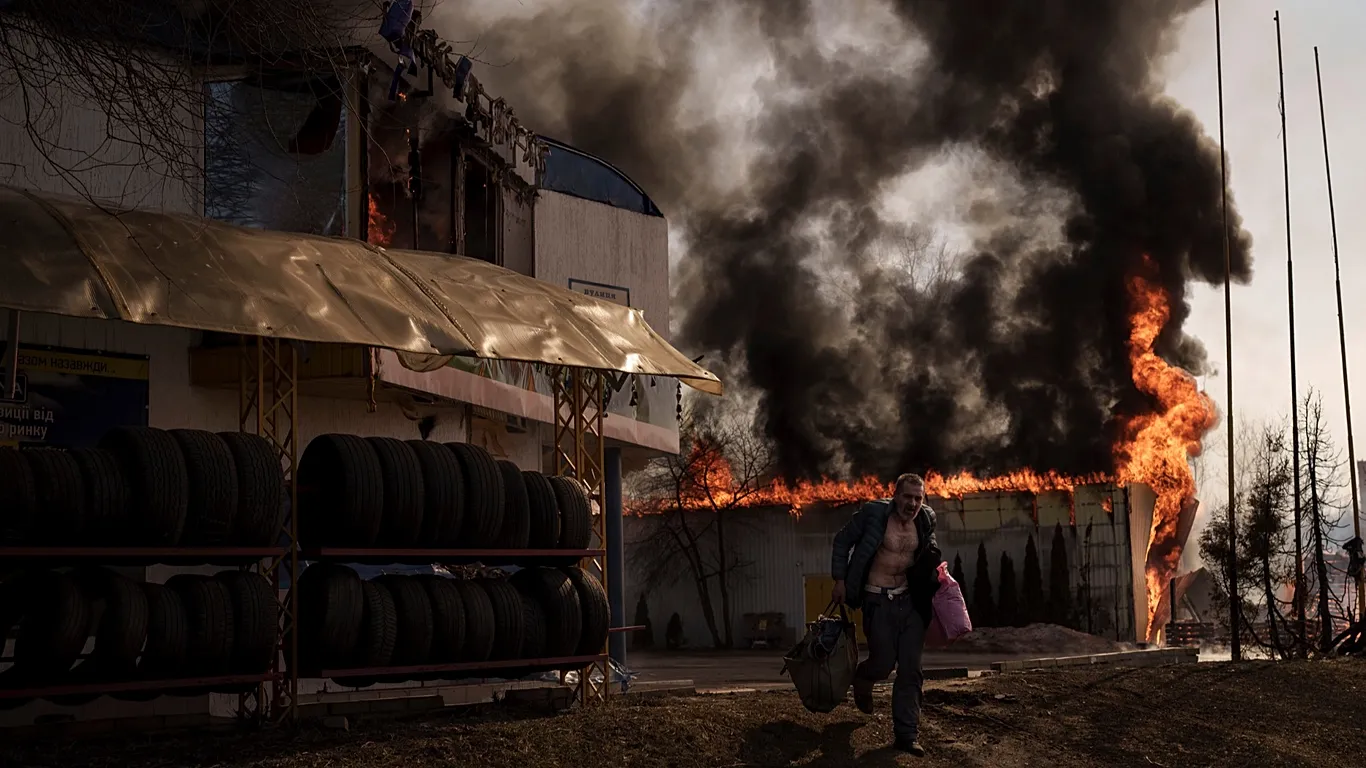
More than four years after Russia launched its full-scale invasion of Ukraine, the conflict has become the largest in Europe since World War II. Estimates from the Centre for Strategic and International Studies suggest that up to 1.8 million soldiers have been killed, wounded, or gone missing, while nearly 15,000 civilians have died. Millions more have been displaced, with around six million Ukrainians fleeing abroad and another 3.7 million internally displaced.
Beyond the human toll, the war has inflicted severe damage on Ukraine’s ecosystems. Despite covering less than six percent of Europe’s land area, the country hosts roughly a third of the continent’s biodiversity. Ongoing fighting has intensified threats to more than a thousand vulnerable species of plants, animals, and fungi.
Environmental experts say the conflict has also generated massive greenhouse gas emissions. According to the Initiative on GHG Accounting of War, emissions linked to the war have reached approximately 311 million tonnes of CO2 equivalent since February 2022. In the fourth year alone, emissions rose by an additional 75 million tonnes—roughly comparable to the annual emissions of France.
These emissions stem from a range of sources, including fuel-intensive military operations, widespread landscape fires, destruction of energy infrastructure, population displacement, aviation, and large-scale reconstruction efforts. Fossil fuel use by tanks, aircraft, and military logistics accounts for a significant share, making up around 37 percent of emissions during the most recent year of conflict.
Wildfires have emerged as a particularly severe consequence. In 2025, Ukraine recorded approximately 1.39 million hectares of burned land, far exceeding pre-war levels. Scientists attribute this surge partly to unusually hot and dry conditions linked to global warming, which have made fires harder to control. Ongoing combat has further hindered firefighting efforts, allowing small ignitions to escalate into large-scale blazes.
At the same time, reconstruction—especially of damaged energy infrastructure—has driven additional emissions. Intensified attacks on heating and electricity systems during the winter of 2025–2026 have increased the need for rebuilding, further adding to the environmental cost.
Researchers emphasize that military activity remains a major but often underreported source of global emissions. While armed forces are estimated to account for around 5.5 percent of global greenhouse gas output, transparency remains limited. Soroush Abolfathi of University of Warwick noted that a large share of military emissions in Europe is not fully disclosed, raising concerns about accountability.
In response, Ukraine has announced plans to seek compensation for environmental damage. At the COP30 summit, Ukrainian officials outlined a proposal to pursue more than €37 billion in what could become the first case of climate reparations linked to armed conflict.
Analysts warn that the interaction between war and climate change is creating a feedback loop: conflict drives emissions and environmental degradation, while worsening climate conditions intensify the impacts of war. Without intervention, they say, the long-term ecological consequences could rival the already devastating human cost.