
‘Hothouse Earth’ warning: Scientists raise alarm as key climate systems approach tipping points
Scientists are warning that several of Earth’s key climate systems may be approaching critical tipping points, raising the risk of a rapid and potentially irreversible shift toward a so-called “hothouse Earth” scenario marked by extreme warming and rising sea levels.
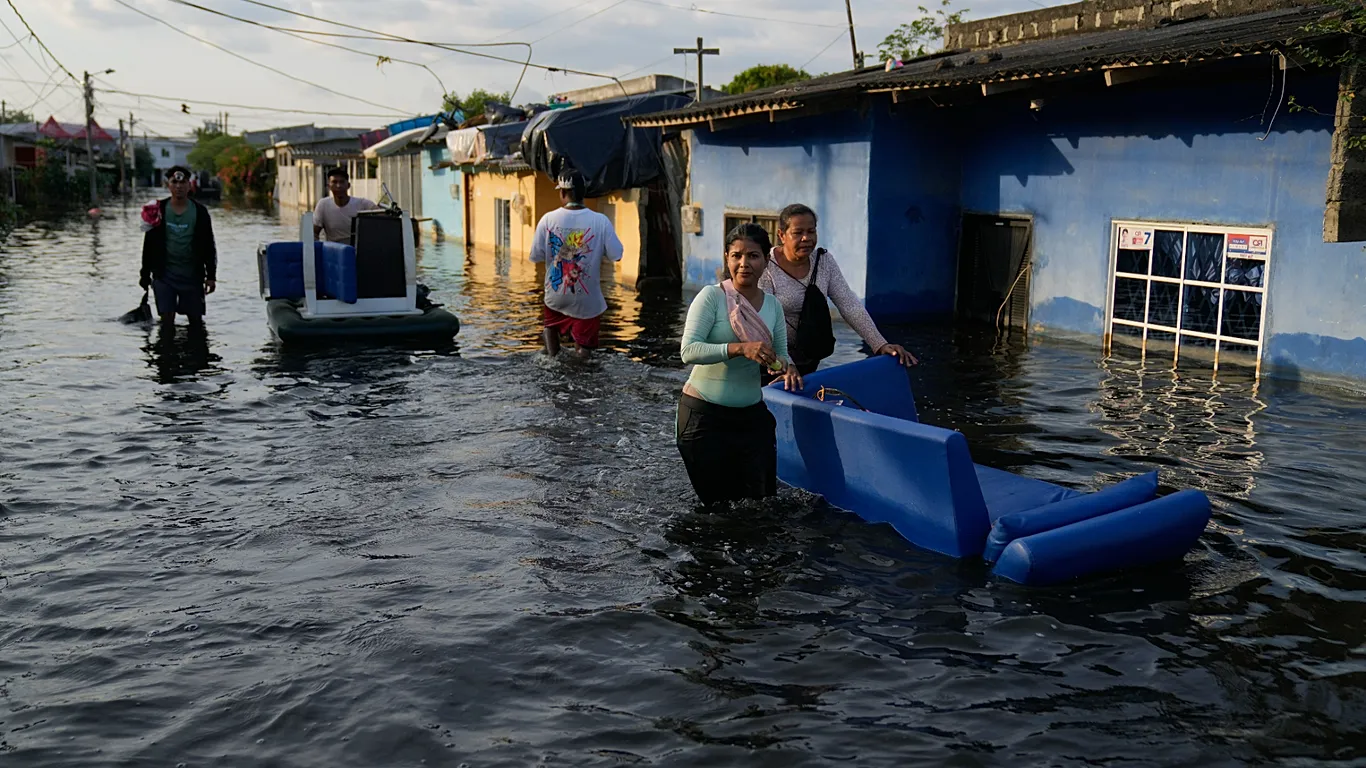
A new international study, led by William Ripple of Oregon State University and published in One Earth, brings together evidence on climate feedback loops and 16 major tipping elements—subsystems of the planet that could become unstable once temperature thresholds are exceeded.
Researchers warn that abrupt changes in these systems could trigger a chain reaction, where disruptions in one area intensify instability in others. Such cascading effects could push the planet onto a path of sustained high temperatures and accelerating sea level rise—conditions that may be extremely difficult to reverse, even with significant reductions in greenhouse gas emissions.
Ripple noted that Earth’s climate has remained relatively stable for more than 11,000 years, allowing human civilisation to develop. However, he cautioned that this stability is now being lost, potentially ushering in a period of unprecedented climate change.
Among the most vulnerable tipping elements identified are the ice sheets of Greenland and Antarctica, mountain glaciers, Arctic sea ice, permafrost regions, boreal forests, the Amazon rainforest, and the Atlantic Meridional Overturning Circulation (AMOC), a major ocean current system that plays a critical role in regulating global climate patterns.
The study highlights that global temperatures have already exceeded 1.5°C above preindustrial levels for 12 consecutive months—an important benchmark set by the Paris Agreement. While long-term trends are typically measured over decades, researchers say this sustained breach suggests the planet may already be nearing that threshold.
Co-author Christopher Wolf of Terrestrial Ecosystems Research Associates stated that current global temperatures are likely at their highest in at least 125,000 years. At the same time, atmospheric carbon dioxide levels have surpassed 420 parts per million—around 50 percent higher than pre-industrial levels and possibly the highest in two million years.
A key concern outlined in the report is the role of climate feedback loops—processes that can amplify warming once triggered. Melting ice reduces the Earth’s reflectivity, permafrost thaw releases additional greenhouse gases, and forest dieback diminishes carbon storage capacity. Together, these effects can accelerate warming and further destabilize the climate system.
The researchers stress that urgent action is needed to mitigate these risks. Expanding renewable energy, protecting ecosystems that store carbon, and integrating climate resilience into policy frameworks are among the measures highlighted. They also call for new approaches, including improved monitoring of tipping points and more comprehensive risk management strategies.
Some tipping processes may already be underway. The Greenland and West Antarctic ice sheets are showing signs of destabilisation, while permafrost regions, mountain glaciers, and the Amazon rainforest appear increasingly vulnerable. Because Earth’s climate systems are interconnected, changes in one region can have far-reaching global consequences.
For instance, accelerated melting of Greenland’s ice sheet could weaken the AMOC, which in turn may disrupt tropical rainfall patterns and contribute to the transformation of parts of the Amazon rainforest into savanna. Such changes would release vast amounts of stored carbon, further intensifying global warming.
Scientists warn that many of these thresholds remain uncertain, making precautionary action essential. Once crossed, some tipping points could lock the planet into long-term changes that are effectively irreversible on human timescales.
“Opportunities to prevent the most dangerous outcomes are rapidly narrowing,” the researchers conclude, emphasizing that acting now is far more feasible than attempting to reverse course after critical thresholds have been exceeded.