
Mediterranean Cities Form Unified Strategy to Confront Climate Change
Supported by the European Commission, the COMPOSE project is bringing together interdisciplinary expertise and established best practices to help small and medium-sized cities develop effective responses to climate change and accelerate their transition toward renewable energy systems.
Situated at an altitude of around 700 meters, Anogeia is among the highest inhabited settlements on the island of Crete. The village regularly experiences cold winter conditions, making heating essential for its roughly 2,000 residents, many of whom depend on livestock farming and tourism for their livelihoods.
Until relatively recently, a large share of households in Anogeia still relied on traditional wood-burning fireplaces. While widely used, these heating methods contributed to indoor air pollution, increased smoke emissions, and placed additional pressure on nearby forests through firewood consumption. Combined with growing energy demands and the lingering effects of Greece’s economic downturn, these issues pushed local authorities to search for cleaner and more affordable alternatives.
According to Mayor Socratis Kefalogiannis, the municipality saw environmental protection and public health as central responsibilities. He noted that local authorities encouraged residents to move away from traditional fireplaces and adopt more efficient heating systems that reduce resource consumption while improving air quality and overall environmental conditions within the village.
Anogeia is one of the municipalities participating in COMPOSE, a European initiative implemented between 2016 and 2019 across 11 Mediterranean regions. The project was designed to support local governments that often struggle with limited personnel, insufficient funding, and a lack of technical expertise needed to design and implement long-term sustainable energy strategies.
The program was largely financed through the European Union’s cohesion policy, which covered approximately 75% of its total €2.5 million budget. Its central goal was to expand renewable energy adoption and reduce carbon emissions in the Mediterranean region, an area that is warming at a significantly faster rate than the global average—estimated at around 20% higher.
Stavroula Tournaki, a senior expert at the Technical University of Crete, explained that the initiative originated from a practical challenge: how to equip small and medium-sized municipalities with the knowledge and tools required to address climate change effectively, despite limited staffing and technical capacity. The aim was to strengthen resilience while improving long-term energy planning.
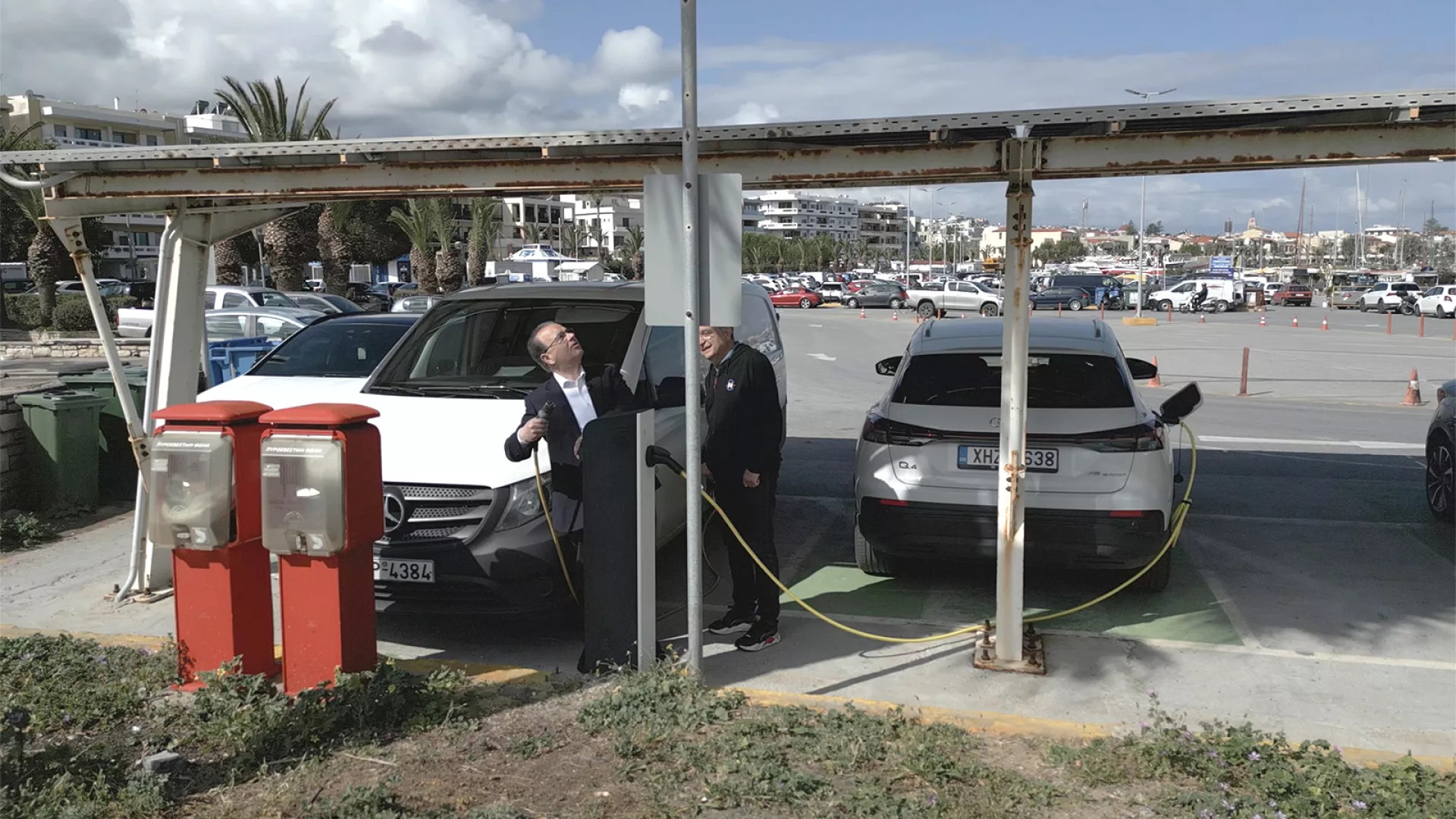
In nearby Rethymno, another coastal city participating in COMPOSE, local authorities have implemented several sustainability measures to address pressures linked to rapid urban development. Among these initiatives is a system that collects used cooking oil from households and businesses, converting it into biofuel for energy use. In addition, the city has installed solar panels to supply electricity for municipal buildings, including the city hall, as well as charging stations for electric vehicles.
Mayor Georges Marinakis emphasized that environmental protection should be viewed as a shared responsibility among all stakeholders, rather than something delegated to others. He underlined the importance of collective action in addressing climate-related challenges at the local level.
Today, the outcomes of the COMPOSE initiative continue through the COMPOSE toolbox, a digital platform maintained by researchers and students at the Renewable and Sustainable Energy Systems Laboratory of the University of Crete. The system functions both as a structured database and a practical guide, offering municipalities a clear, step-by-step framework to design and implement climate mitigation strategies tailored to their local conditions.