
Report Finds Climate Change Intensifying Heat, Rainfall and Ecosystem Shifts in the Great Lakes Region
A newly updated scientific report confirms that climate change is significantly altering weather patterns and ecosystems across the Great Lakes region, bringing warmer temperatures, heavier rainfall and growing environmental disruptions.
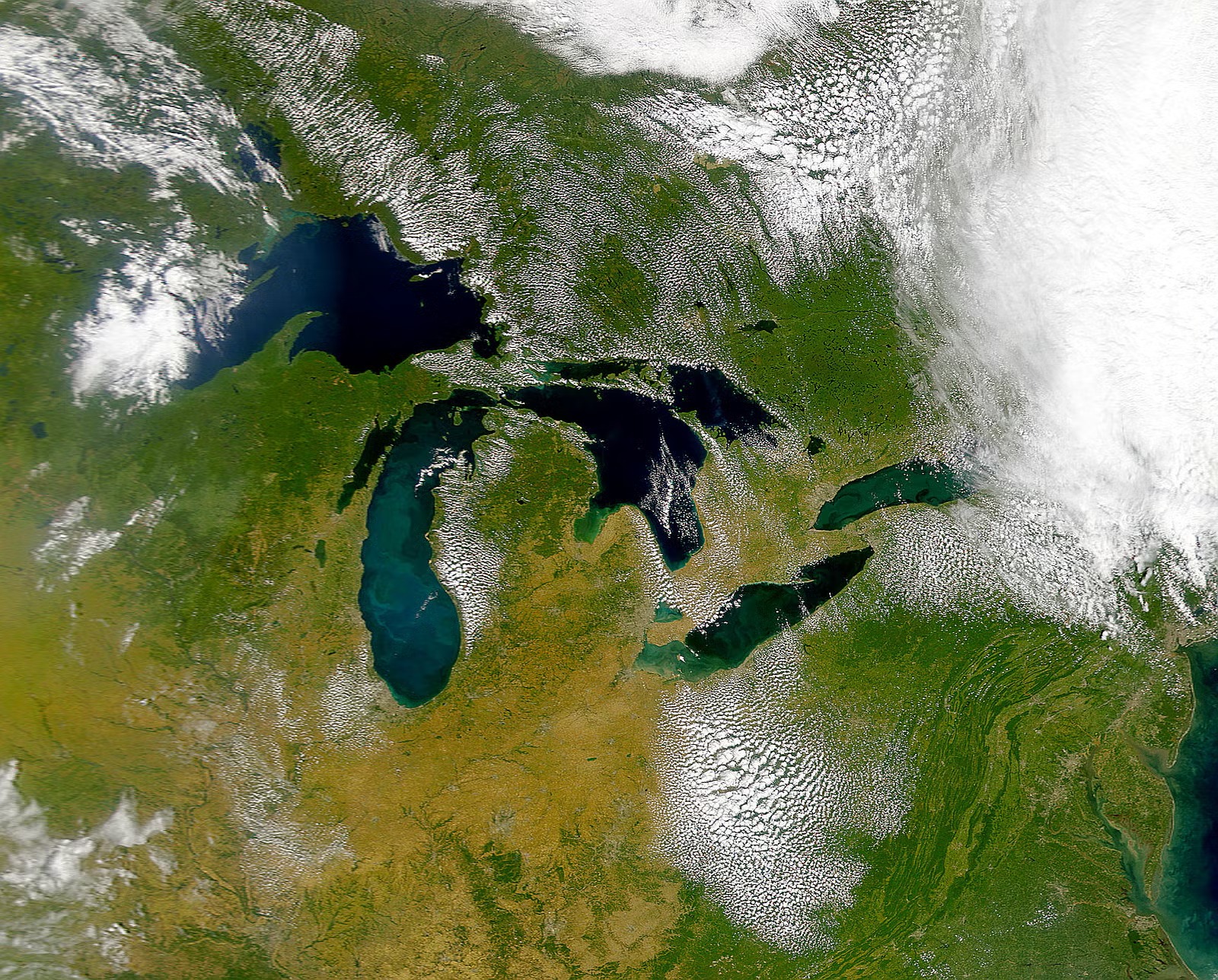
The study highlights that the region—home to freshwater resources serving around 40 million people—has experienced notable warming and increased precipitation over recent decades, alongside shifts in lake levels and declining fish populations.
Originally commissioned in 2019 by the Environmental Law & Policy Center, the research has now been revisited by a team of more than a dozen scientists. Their updated findings reinforce earlier conclusions, showing that climate-related impacts have intensified as global temperatures continue to rise.
According to lead author Don Wuebbles, an atmospheric scientist at the University of Illinois Urbana-Champaign, the region is facing increasingly dangerous conditions. He noted that temperatures are climbing, extreme weather events are becoming more frequent, and rainfall is occurring in more intense bursts than in the past.
The report found that between 2017 and 2024, average annual temperatures in the Great Lakes area were about 1.1°F higher than in the previous four decades. Since 1951, overall air temperatures in the region have risen by nearly 3°F, while total precipitation has increased by roughly 15 percent. In addition, the number of days with heavy precipitation—defined as at least two inches of rain or snow—has risen by 6 percent.
Water temperatures in the lakes themselves are also climbing. Lake Superior’s summer surface temperature increased by nearly 4.8°F between 1979 and 2023, while Lakes Michigan, Huron, Erie and Ontario all recorded their highest average temperatures in the past year.
Climate change is also contributing to more variable lake levels. Projections suggest that by mid-century, water levels could rise significantly, with Lake Superior expected to increase by about 7.5 inches and Lakes Michigan and Huron by as much as 17 inches. These changes pose risks to communities living along shorelines and infrastructure built near the water.
The report further warns that rising temperatures and increased rainfall are fueling harmful algal blooms, which can degrade water quality. Combined with land-use changes, these factors are expected to affect both the availability and safety of water resources in the region.
Energy demand is another growing concern. With more than 800 data centers located in states surrounding the Great Lakes, the need for electricity and cooling—both water- and energy-intensive—could rise sharply as temperatures increase.
Looking ahead, the region is projected to experience more extreme heat and fewer freezing days. By the end of the century, scientists estimate there could be between 30 and 60 additional days each year with temperatures exceeding 90°F, alongside a reduction of 25 to 55 days below freezing.
These shifts are already impacting ecosystems. Warmer winters and reduced ice cover are contributing to the decline of species such as lake whitefish, whose eggs rely on ice for protection from currents and waves. Forest ecosystems are also changing, with tree species gradually moving northward.
Interestingly, recent research on tree rings suggests that older trees may be growing faster than previously assumed, potentially enhancing their role in carbon storage. Scientists say this could influence forest management strategies, allowing for continued timber production while maintaining carbon sequestration benefits.
However, under scenarios of continued heavy fossil fuel use, temperatures in the Great Lakes region could rise by as much as 10°F by the end of the century, underscoring the urgency of addressing climate change.