
Scientists Accuse Trump-Era Reports of Misrepresenting Climate Science to Justify Policy Rollbacks
Two major reports produced during the Trump administration aimed at overturning a long-standing scientific conclusion on climate change have been sharply criticised by experts, who say the documents contain significant errors, selective use of data and misleading interpretations.
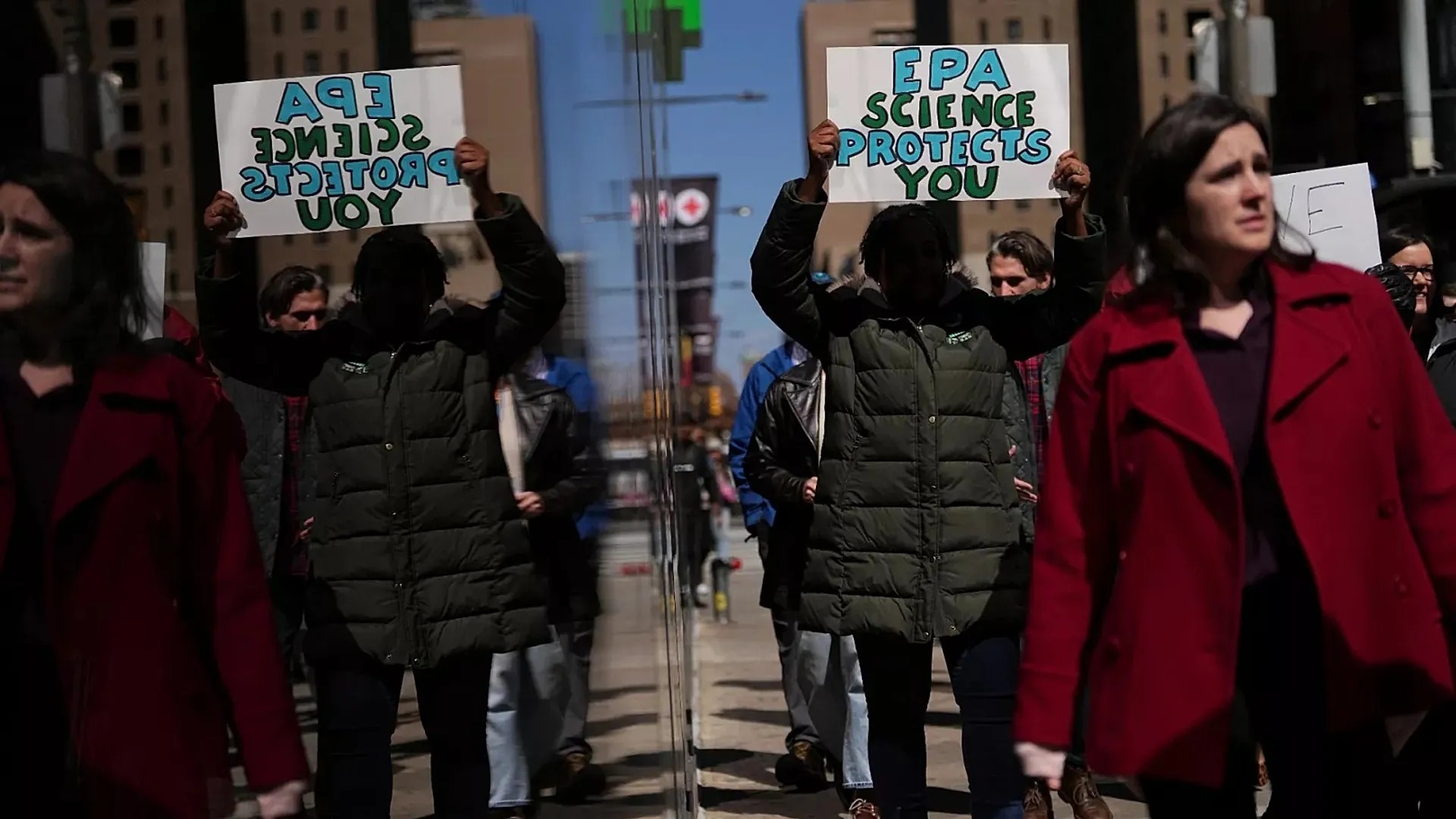
According to a review by dozens of scientists surveyed by The Associated Press, the reports — issued by the Environmental Protection Agency and the Department of Energy — appear to downplay the risks of climate change by distorting evidence and omitting key findings.
Among the issues highlighted, one report claimed that Arctic sea ice decline has been minimal, yet relied on data from Antarctica to support that assertion. Another example involved applying findings from a study focused on France’s agriculture to the United States, despite clear differences in climate conditions and farming systems.
Scientists also pointed out inconsistencies in how wildfire data was presented. While the report questioned the reliability of older datasets, it still included them in graphics in a way that suggested wildfires were more severe in the past than today.
Overall, many experts concluded that the documents ignored or selectively interpreted scientific research to cast doubt on the seriousness of climate change.
Widespread criticism from researchers
Out of 64 scientists who responded to the AP’s inquiry, the majority expressed negative views of the reports. Some said their own research had been misrepresented or taken out of context.
Jennifer Marlon described the analysis as biased, arguing that the data presentation relied on well-known misinformation techniques. She said the reports effectively demonstrate “how to mislead using statistics.”
The reports were part of a broader effort to reverse the 2009 “endangerment finding,” a scientific determination that climate change poses a threat to public health and welfare. This finding underpins numerous environmental regulations in the United States.
If revoked, it could weaken or eliminate rules limiting emissions from vehicles, power plants and industrial sources.
Disputing mainstream climate science
One of the reports, produced by the Department of Energy, questions the reliability of climate models, suggests that disaster trends have not significantly worsened over time, and argues that higher carbon dioxide levels could even have benefits, such as boosting plant growth.
The Trump administration maintains that while climate change is real, its impacts are uncertain and potentially less severe than widely believed. It also argues that US emissions reductions would have limited global impact, given that the country is the world’s second-largest emitter after China.
However, many scientists reject these conclusions, saying they are based on incomplete or distorted evidence.
For instance, the report incorrectly stated that wildfire activity in the US has not increased since 2007. Independent data shows that average annual burned areas have in fact risen over that period.
Similarly, the document understated Arctic sea ice loss, which has declined by more than 40 percent since 1980 — far more than the figure cited in the report.
Debate over scientific integrity
Officials from the Environmental Protection Agency defended their approach, stating that they had considered a wide range of data sources when evaluating whether the original endangerment finding remains valid.
The Department of Energy said it aimed to encourage a more balanced and evidence-based discussion, while the White House described the work as “Gold Standard Science” grounded in verifiable data.
Report authors acknowledged that errors, such as the incorrect sea ice reference, would be corrected. They also argued that their work was intended to highlight perspectives that are often overlooked in mainstream discussions.
Still, critics say the overall methodology lacks objectivity. Pat Parenteau stressed that reversing a major policy requires a reasoned and impartial analysis — something he believes these reports fail to provide.
Concerns over policy implications
Environmental groups have already begun legal challenges against the proposed rollback. If the endangerment finding is overturned, it could undermine key climate regulations, including limits on emissions from coal-fired power plants, methane controls in oil and gas production, and stricter vehicle standards set for future model years.
The reports have also drawn criticism for prioritising certain sources over established scientific consensus. Notably, the Environmental Protection Agency cited the Department of Energy report more frequently than assessments from the Intergovernmental Panel on Climate Change, which is widely regarded as the global authority on climate science.
Many experts described the reports as selectively constructed to support predetermined conclusions. Several used the term “cherry-picking” to characterise how evidence was chosen and presented.
Steven Sherwood said that while the reports are clearly written, they fail to provide an honest representation of the broader scientific picture.
Others echoed similar concerns. Francois Bareille said his research had been misapplied, noting that findings specific to French agriculture cannot be directly extended to the US context.
The documents also sparked debate over terminology, with one section suggesting that ocean acidification be described instead as “neutralisation.” Critics argued that such language downplays the well-documented harmful effects of rising carbon dioxide levels on marine ecosystems.
Divided opinions but strong majority criticism
While a small number of experts supported the reports, the majority were highly critical. When asked to grade the documents as academic work, many scientists assigned failing marks.
Jennifer Francis remarked that the reports deserved low scores for accuracy but high marks for manipulation, describing them as “twisted” to fit a specific narrative.
Despite disagreements among experts, there is broad consensus in the scientific community that climate change is accelerating and poses significant risks.
As the public consultation period continues, the administration will be required to review feedback before making a final decision on whether to revoke the endangerment finding — a move that could have far-reaching consequences for US climate policy and global efforts to reduce emissions.