
Scientists Warn Carbon Emissions Could Make 1.5°C Warming Threshold Unavoidable by 2028
Global carbon emissions are rising so quickly that the world could soon pass a critical climate threshold, with scientists warning that limiting warming to 1.5°C may become nearly impossible within the next few years.
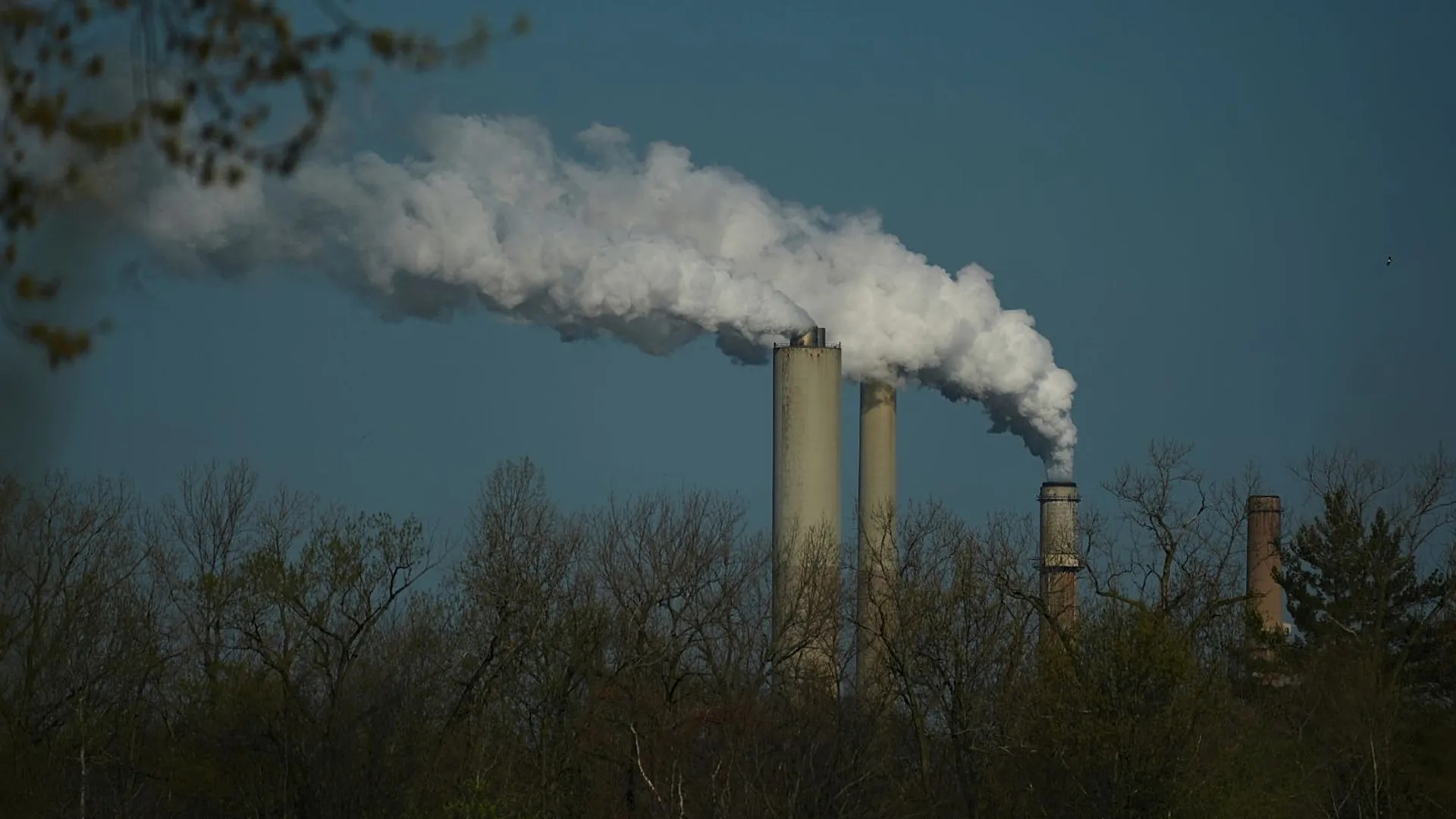
A new study indicates that by early 2028, humanity will likely have released enough greenhouse gases to make crossing the 1.5°C long-term warming limit more probable than not. This benchmark refers to the increase in global temperatures compared to preindustrial levels and has been a central target of international climate agreements.
Researchers estimate that once this level of carbon dioxide accumulates in the atmosphere, there will be at least a 50 percent chance that the planet will be locked into exceeding the 1.5°C threshold over the long term.
The findings come from a group of around 60 international scientists and suggest that the timeline for reaching this tipping point is even shorter than previously expected in last year’s assessment.
Emissions rising faster than expected
Scientists involved in the study highlight that not only are emissions continuing to increase, but the pace of warming is also accelerating.
Zeke Hausfather, a co-author of the report affiliated with Stripe and Berkeley Earth, noted that the situation is worsening more rapidly than anticipated. According to him, the world is moving in the wrong direction at a time when urgent reductions in emissions are needed to meet climate goals.
Why the 1.5°C target matters
The 1.5°C limit, established under the Paris Agreement in 2015, is widely seen as a critical boundary for avoiding the most severe consequences of climate change.
Exceeding this threshold would likely lead to more intense heatwaves, prolonged droughts, stronger storms, and rising sea levels that could threaten coastal communities and small island nations.
Over more than a century of climate research, scientists have identified a strong link between greenhouse gas concentrations—particularly carbon dioxide and methane—and global temperature increases.
The latest report calculates that humanity can emit only about 143 billion tonnes of additional carbon dioxide before reaching the point where surpassing 1.5°C becomes effectively unavoidable. Given that the world currently produces approximately 46 billion tonnes annually, that limit could be reached by around February 2028.
At present, global temperatures are already about 1.24°C higher than preindustrial levels.
A worsening energy imbalance
The study, published in Earth System Science Data, also highlights a growing imbalance in the Earth’s energy system. This imbalance refers to the difference between the energy the planet absorbs from the sun and the amount it releases back into space.
According to the researchers, this imbalance is increasing and is now roughly 25 percent higher than it was a decade ago. This means the Earth is retaining more heat than it is losing, accelerating the warming process.
Lead author Piers Forster from the University of Leeds described the overall outlook as deeply concerning, noting that multiple climate indicators are consistently breaking records.
The report also identifies fossil fuel combustion as the primary driver of emissions. However, reductions in air pollution—such as soot and aerosols that previously had a cooling effect—are also contributing to higher observed temperatures. Changes in cloud behavior are another factor influencing the warming trend.
Crossing the threshold sooner than expected
Although global temperatures briefly exceeded the 1.5°C mark in 2024, reaching 1.52°C for that year, the Paris Agreement threshold is based on long-term averages rather than short-term spikes.
Even so, scientists warn that sustained warming above 1.5°C could occur within the next few years, regardless of yearly fluctuations, due to the cumulative nature of greenhouse gas emissions.
Joeri Rogelj, a climate scientist at Imperial College London and co-author of the study, emphasized that the 1.5°C target represents a political and scientific boundary beyond which climate impacts become significantly more severe and potentially unacceptable for societies.
He noted that exceeding this level could lead to existential threats for some small island nations due to rising sea levels, while disproportionately affecting vulnerable populations around the world.
Still time to act despite warnings
Despite the alarming projections, scientists stress that efforts to reduce emissions remain essential, even if the 1.5°C target is surpassed.
Experts point out that every additional fraction of a degree of warming will increase the severity of climate impacts, including extreme heat, droughts, heavy rainfall, and more powerful storms.
While some researchers argue that the 1.5°C goal may be difficult to achieve, they agree that continued action can still significantly limit the scale of future damage and protect communities from the worst effects of climate change.