
Tourists in Malta Contribute to Climate Research by Sharing Coastal Photos from Their Holidays
Visitors spending their summer in Malta now have the opportunity to do more than relax by the sea—they can also support climate research with a simple photo taken on their smartphones.
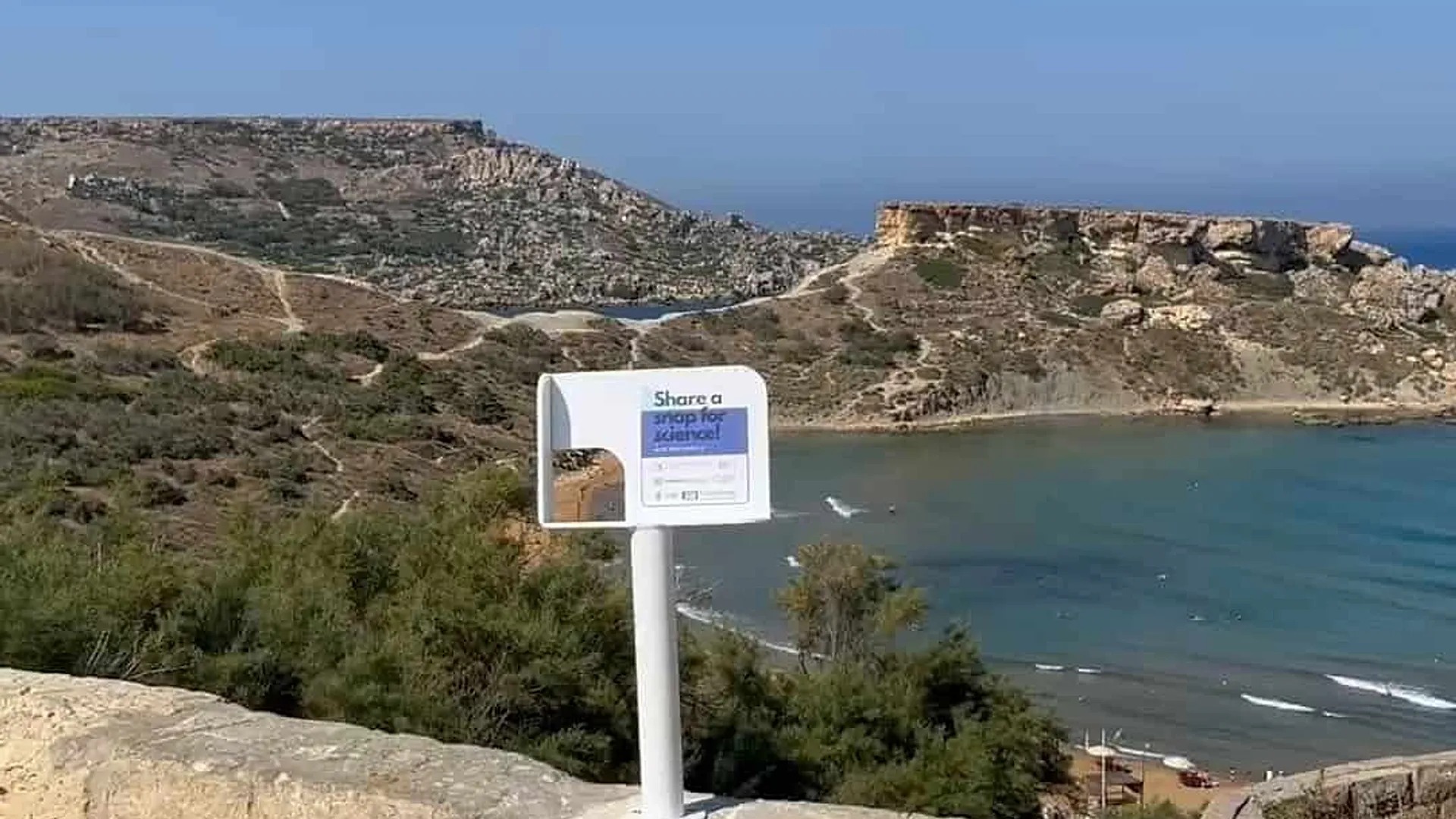
Through the international CoastSnap initiative, tourists visiting Riviera Bay (Għajn Tuffieħa), one of Malta’s most popular beaches, are encouraged to take part in monitoring how climate change is affecting coastal landscapes.
Originally developed in Australia, CoastSnap has expanded into a global citizen science network that now operates at more than 220 beaches across 21 countries. Malta joined the initiative this year, with plans already in place to introduce additional photo stations around the island.
How visitors can participate
Taking part in the project is straightforward. Beachgoers simply need to locate the CoastSnap station positioned at the entrance to Riviera Bay. There, they can place their smartphone into a fixed holder designed to ensure that each image is captured from the same angle and position.
After positioning the phone, participants scan a QR code provided at the station and follow simple instructions to upload their photo. The standardized framing ensures that each image can be accurately compared with others taken at different times.
Supporting long-term coastal monitoring
All submitted images are added to a central database where they are analyzed to track gradual changes in the coastline. By comparing photos taken under varying conditions—across different seasons, weather patterns, and times of day—scientists can build a clearer picture of how coastal environments are evolving.
The greater the number of contributions, the more reliable and detailed the data becomes, allowing researchers to better understand erosion patterns, shoreline movement, and other climate-related impacts.
Expanding citizen science across Europe
Within Europe, the CoastSnap project is most established in countries such as France, Spain, and the United Kingdom, where multiple monitoring locations are already in operation. Participation in other countries remains more limited; for example, Poland’s involvement currently consists of a small number of contributions from coastal areas like Gdynia and Rewa.
By joining the initiative, Malta is becoming part of a growing international effort to combine tourism with scientific observation, enabling everyday visitors to play a role in tracking the visible effects of climate change on coastal regions.