
Trump’s Top Staff Choices Could Have Far-Reaching Consequences for the Climate
Several of President-elect Donald Trump’s high-ranking staff choices have close ties to the fossil fuel industry.
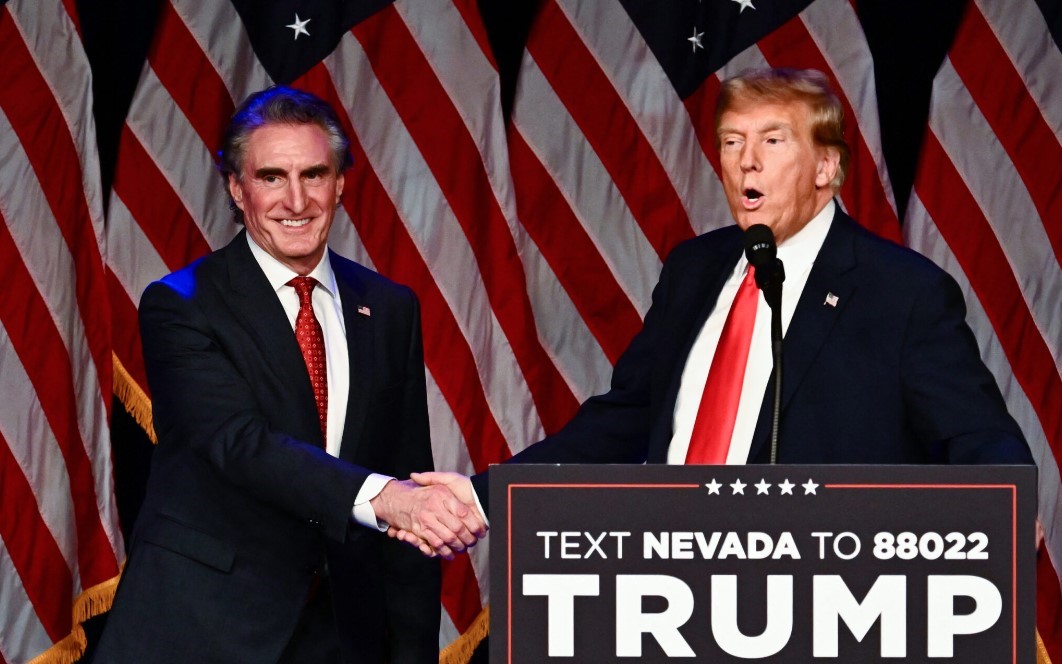
U.S. President-elect Donald Trump has spent the last week nominating the staff who will carry out his goals for rolling back renewable energy and environmental policies throughout his term.
Trump has tapped leaders with deep ties to the fossil fuel industry for two key positions: Energy secretary and Interior secretary. The selections still must be confirmed by the Senate, unless Trump bypasses the process by using recess appointments, as he has said he might do. Experts say his picks are well-poised to further ramp up domestic oil and gas production at a critical moment in the accelerating climate crisis.
These decisions come as delegates from nearly 200 countries meet in Azerbaijan for the 29th global climate conference to chart a course slowing runaway warming by slashing emissions to levels committed to under the 2016 Paris Agreement. Trump has pledged to remove the U.S. from the legally binding treaty when he enters office, the second time he will have done so.
There are still a few open slots for cabinet and top staff roles that could shape environmental policy in the U.S. for the next four years, but here is what we know about Trump’s roster so far.
Image-Savvy EPA Head: Last week, Trump tapped former U.S. Rep. Lee Zeldin of New York to head the EPA, an agency that enforces national standards for major environmental laws such as the Clean Water Act and Clean Air Act. Many are aimed at protecting human health. During the last Trump administration, former EPA administrators Scott Pruitt and Andrew Wheeler, a former coal lobbyist, were responsible for rolling back more than 100 environmental rules.
Zeldin is set to continue that mission, though likely using a different strategy. As my colleague Marianne Lavelle recently wrote, “Zeldin comes to the EPA not as a combatant or a bureaucrat, but as a politician with a record of successfully delivering Republican messages in Democratic strongholds.”
He has a mixed environmental record: During his four terms in Congress, from 2015 to 2023, he pushed forward water resources development legislation in the wake of Superstorm Sandy and led a long effort to preserve a key bird and ocean life habitat in Long Island Sound. However, Zeldin did not vote on or frequently voted against proposals to reduce greenhouse gas emissions. During a failed run for New York governor, he pledged to overturn the state’s ban on fracking.
Altogether, Zeldin earned a 14 percent pro-environmental voting record score from the League of Conservation Voters—higher than nearly any other current Republican but still low for someone expected to hold up the mandates of the EPA, according to the environmental nonprofit.
“During the confirmation process, we would challenge Lee Zeldin to show how he would be better than Trump’s campaign promises or his own failing 14 percent environmental score if he wants to be charged with protecting the air we breathe and the water we drink, and finding solutions to climate change,” Tiernan Sittenfeld, LCV’s senior vice president for government affairs, told Inside Climate News.
Fossil Fuels and Federal Lands: Trump chose North Dakota Gov. Doug Burgum as secretary of the Department of the Interior, where he will head up management of about 20 percent of land in the U.S. The position comes with a range of responsibilities, including overseeing the national park system, managing wildlife conservation efforts and coordinating the government’s relationship with the country’s 574 federally recognized tribes.
Burgum will also spearhead the Trump administration’s plans to lease more federal lands and waters to oil and gas companies, which has environmentalists particularly on edge as the governor of the nation’s No. 2 oil producing state is known to have close ties to fossil fuel industry powerhouses. That includes Harold G. Hamm, the billionaire founder of oil company Continental Resources, The New York Times reports.
However, some of North Dakota’s tribes praised Burgum’s pending appointment. During his time as governor, Burgum has cultivated a closer relationship with tribes in the state through several initiatives, including a tax-sharing agreement with Native nations, the North Dakota Monitor Reports.
How Burgum runs the department could have profound implications for the climate. Roughly 22 percent of all U.S. emissions come from burning fossil fuels extracted from federal land, according to the U.S. Geological Survey. His background holds some clues for what Americans can expect for federal land management over the next four years. During Burgum’s time as governor, the state sued Interior to prompt more lease sales for oil and gas, and in a 2017 address to the Lignite Energy Council, he lauded coal mining and other fossil fuel executives for delivering “some of the most reliable and cheapest electricity in the country.”
But he’s also helped North Dakota beef up renewable energy, particularly through wind power, E&E News reports. In 2021, Burgum’s office set a goal for becoming carbon neutral by 2030. Under the plan, this would be largely achieved by advancing a multibillion-dollar pipeline project to trap and store carbon dioxide from ethanol plants around the Midwest. Rural property owners and environmental advocates have pushed back on the project due to fears over how it could affect nature and their property.
Bottom line: Analysts expect Burgum to focus on carrying out Trump’s goal to “drill, baby, drill.”
“I think [Burgum] will be highly effective in dismantling the protections that we have to protect our lands and our people,” U.S. Rep. Melanie Stansbury (D-N.M.) told E&E News.
A Climate-Skeptic Energy Secretary: To serve as secretary of energy in his cabinet, Trump chose Chris Wright, the chief executive of Liberty Energy, a Denver-based fracking company. Among the most controversial choices for a directly climate-related position, Wright has gone on record saying “there is no climate crisis, and we’re not in the midst of an energy transition either,” in a video posted last year.
The chief mandate of the Department of Energy is to manage and protect the U.S. nuclear arsenal. But if confirmed, Wright will oversee many parts of the country’s energy production. He is expected to redirect billions of dollars in climate and clean energy-related spending from the Inflation Reduction Act, at least some of which Republicans are hoping to repeal outright. However, experts say this move could face backlash because much of the IRA spending already distributed has gone to red states, and oil and gas companies benefit from tax credits for carbon capture, biofuels and hydrogen.
One of Wright’s first orders of business will likely be to eliminate President Joe Biden’s pause on new liquefied natural gas export terminals. Similar to Burgum, Wright is known to have close ties with Continental Resources’ Hamm. Both potential appointees will serve on the new National Energy Council, which Trump writes will “oversee the path to U.S. ENERGY DOMINANCE by cutting red tape, enhancing private sector investments across all sectors of the Economy, and by focusing on INNOVATION over longstanding, but totally unnecessary, regulation.”
Other cabinet positions could also have far-reaching consequences for the climate—and Americans’ ability to adapt to increasingly severe extreme weather. For example, Fox News personality Pete Hegseth—chosen to head the Department of Defense—could disrupt the military’s ability to identify climate-related national security threats or “protect troops from extreme heat, plan for more intense storms and prepare for harsher combat situations,” Arianna Skibell wrote for Politico. Also plucked from Fox News: former U.S. Rep. Sean Duffy of Wisconsin—who referred to “climate alarmists” on a recent segment he co-hosted about the United Nations’ COP29 talks—was selected to lead the Department of Transportation, which oversees the most polluting sector in the U.S.
Source: Inside Climate News – URL: https://insideclimatenews.org/news/19112024/todays-climate-trump-staff-choices-fossil-fuels/