
UN Report Urges Unified Global Action on Climate, Pollution and Biodiversity Crises
A major United Nations report has called for a fundamental shift in how the world addresses environmental challenges, stressing that climate change, pollution, biodiversity loss and land degradation must be tackled together rather than in isolation.
The landmark assessment, described as the most comprehensive global environmental review to date, was produced by nearly 300 scientists from 83 countries under the United Nations Environment Programme. It warns that current approaches are insufficient to address the interconnected crises threatening both human well-being and the natural world.
Researchers highlight that over one million plant and animal species are now at risk of extinction, with environmental degradation accelerating due to the combined pressures of climate change, pollution and unsustainable land use.
Interconnected crises demand integrated solutions
According to Bob Watson, one of the lead authors, these environmental problems cannot be treated separately. Climate change, biodiversity loss, pollution and land degradation are deeply intertwined and amplify one another’s impacts.
He emphasised that these crises are already undermining economies, worsening poverty, damaging public health and threatening food and water security, as well as broader national stability.
The report argues that meaningful progress requires coordinated action across governments, industries, financial systems and societies. It also calls for a transition toward a circular economy that recognises the limits of natural resources and prioritises sustainability.
A warning of approaching tipping points
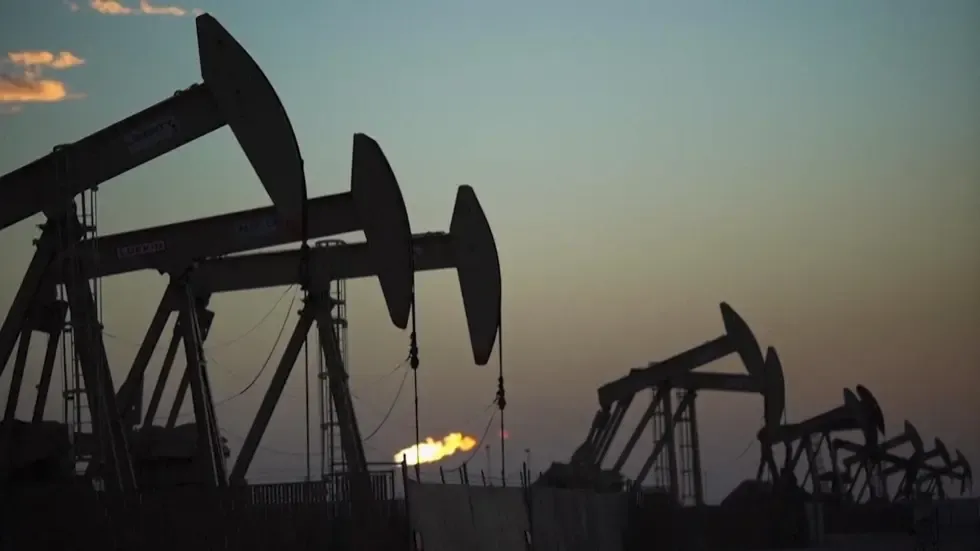
Scientists caution that the planet is nearing critical tipping points. Despite decades of international agreements, greenhouse gas emissions reached a new high in 2024, largely driven by the continued use of fossil fuels such as coal, oil and gas.
Although nearly 200 countries committed to limiting global warming to 1.5°C under the Paris Agreement, current trajectories suggest temperatures could rise by around 2.4°C by the end of the century.
This level of warming is expected to intensify extreme weather events, including heatwaves, droughts, storms and wildfires, further compounding environmental and societal risks.
Climate change also acts as a “threat multiplier,” exacerbating other environmental issues. Katharine Hayhoe noted that without addressing climate change, it will be impossible to effectively tackle biodiversity loss or land degradation.
Mounting environmental and economic costs
The report outlines the scale of the crisis: up to 40 per cent of the world’s land is already degraded, while pollution is linked to approximately nine million deaths annually.
While transitioning to a sustainable global system would require significant investment—estimated at around $8 trillion per year—the long-term benefits are expected to outweigh the costs. By 2070, annual economic gains could reach $20 trillion, eventually rising to $100 trillion in subsequent decades.
The authors also argue that traditional economic indicators such as GDP fail to capture environmental sustainability and should no longer be the sole measure of progress.
Challenges to global cooperation
Despite the urgency outlined in the report, achieving coordinated international action remains uncertain. Political divisions and differing national priorities continue to hinder progress.
Notably, the United States under Donald Trump has distanced itself from several international climate efforts, including withdrawing from the Paris Agreement and promoting fossil fuel development.
According to Watson, weakening international cooperation risks slowing global progress, as some countries may hesitate to act without broader participation.
A critical moment for global action
Even so, scientists remain cautiously optimistic that change is still possible. The report concludes that rapid, large-scale transformation is essential to avoid the most severe consequences of environmental decline.
As Michael Mann put it, the global response must prioritise what is necessary rather than what is politically convenient.
Ultimately, experts warn that the issue is not about saving the planet itself, but about preserving the conditions needed for human societies to thrive. The coming years will be decisive in determining that outcome.