
UN Rights Chief Says Human Rights Can Drive Progress in Tackling Climate Change
The United Nations’ top human rights official has called on governments worldwide to urgently address the growing human rights impacts of climate change, warning that current efforts fall far short of what is needed.
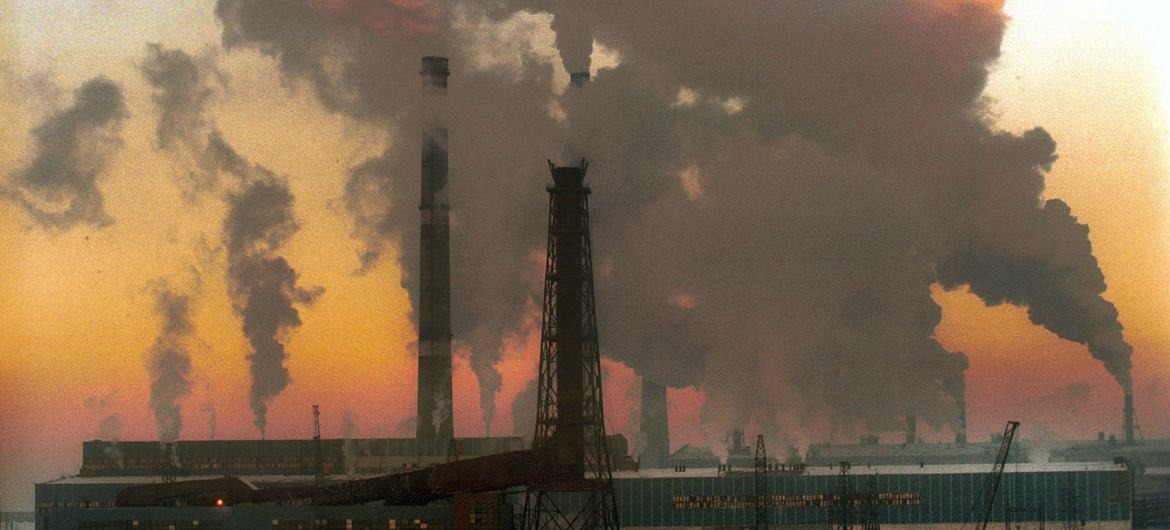
Speaking at the United Nations Human Rights Council in Geneva, High Commissioner Volker Türk questioned whether countries are doing enough to protect people from the escalating effects of climate change and to ensure sustainable management of natural resources.
His conclusion was clear: global action remains insufficient.
Türk stressed that climate change poses serious threats to fundamental human rights—particularly for vulnerable communities—but also presents an opportunity to drive meaningful progress if addressed correctly. Central to this, he said, is a “just transition” away from environmentally harmful practices toward more sustainable systems.
“What is needed is a clear roadmap to transform our economies, societies and political systems in ways that are both fair and sustainable,” he told delegates.
Climate change threatens the right to work
A key focus of the discussions was the impact of climate change on employment and workers’ rights. Moustapha Kamal Gueye from the International Labour Organization warned that climate change is already undermining the fundamental right to decent work.
He said that if current trends continue, around 80 million full-time jobs could disappear by 2030. In addition, more than 70 per cent of the global workforce—approximately 2.4 billion people—will face exposure to extreme heat during their working lives.
These challenges highlight the urgent need for stronger social protection systems, including social security measures for workers in climate-affected regions. Currently, fewer than 9 per cent of workers in the 20 countries most impacted by climate change have access to such protections.
Gueye emphasised that climate resilience must include long-term, rights-based approaches rather than short-term emergency responses.
At the same time, he noted that the transition to low-carbon economies could create more than 100 million new jobs by 2030. However, he cautioned that these opportunities may not arise in the same regions where jobs are lost, making planning and support systems essential.
Calls to phase out fossil fuels
Elisa Morgera, the UN Special Rapporteur on human rights and climate change, also presented a report urging the “defossilization” of global economies. She argued that phasing out fossil fuels is the most effective way to reduce climate impacts while safeguarding human rights.
Morgera pointed out that fossil fuels are deeply embedded in modern life—from food systems to oceans and even human health—often in ways that people do not fully realise.
She also highlighted the need to address misinformation, stating that fossil fuel interests have influenced public understanding and undermined climate action efforts.
Despite geopolitical challenges, she insisted that meaningful change can begin immediately at all levels of society, offering hope for a safer climate future within the current decade.
A people-centred transition
In his closing remarks, Volker Türk reiterated that climate policies must prioritise people, ensuring that no one is left behind during the transition.
He warned that failing to protect livelihoods, health and future opportunities could deepen existing inequalities and injustices.
Echoing this view, Moustapha Kamal Gueye said the global climate agenda should not be reduced to targets and statistics alone, but must remain focused on human lives and rights.
Together, the speakers underscored that addressing climate change is not only an environmental necessity, but also a fundamental human rights imperative.