
UN’s Top Court Rules Nations Must Cut Emissions and Safeguard the Climate
The International Court of Justice has delivered a landmark advisory opinion stating that countries have a legal duty to protect the environment by reducing greenhouse gas emissions and addressing climate change.
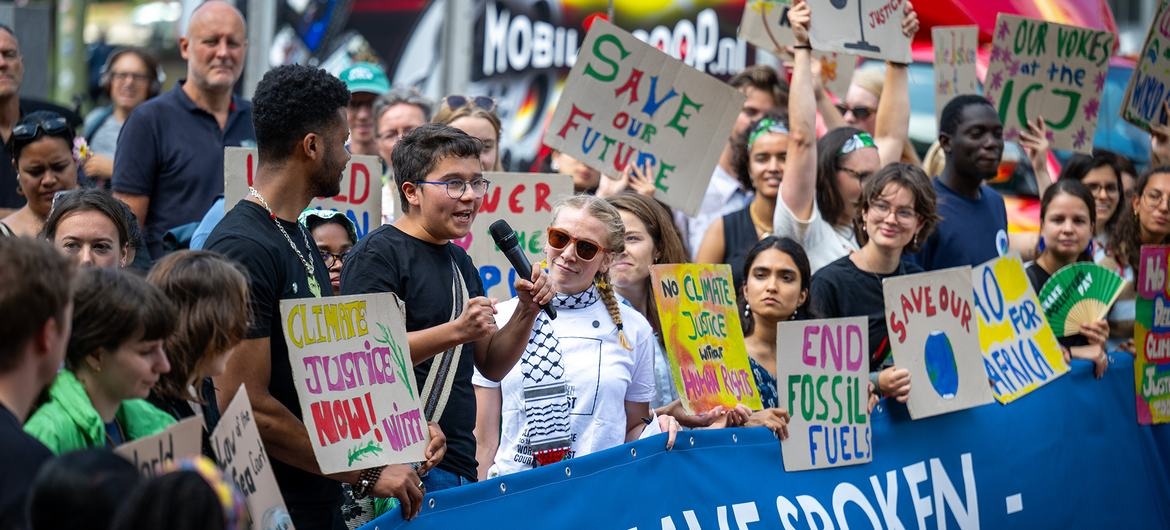
In its decision, announced in The Hague, the Court clarified that States are required to act with due diligence and cooperate internationally to limit environmental harm caused by emissions. It also reaffirmed obligations under the Paris Agreement, including efforts to keep global warming within 1.5°C above pre-industrial levels.
The ruling further states that if countries fail to meet these responsibilities, they could face legal consequences. These may include stopping harmful activities, providing assurances that such actions will not be repeated, and offering reparations depending on the extent of the damage caused.
A major step for climate justice
António Guterres welcomed the opinion, describing it as a significant milestone for environmental protection and global climate justice. He emphasised that the decision highlights the growing role of international law in addressing climate change and reinforces the urgency of transitioning to renewable energy.
The Court based its reasoning on both environmental and human rights law. It noted that countries are already bound by numerous international agreements, including treaties related to biodiversity, ozone protection and emissions reduction, which collectively require them to safeguard the environment for present and future generations.
At the same time, judges stressed that a clean, healthy and sustainable environment is essential for the enjoyment of fundamental human rights. As a result, States must address climate change not only as an environmental issue but also as a human rights obligation.
Origins of the case
The case originated from an initiative led by Vanuatu, supported by a global campaign driven by youth activists. In 2023, the United Nations General Assembly formally requested the Court’s opinion on the legal duties of States regarding climate protection and the consequences of failing to meet those duties.
The proceedings became the largest case in the Court’s history, with dozens of countries participating and submitting evidence.
Legal weight and global implications
Although advisory opinions from the Court are not legally binding, they carry substantial authority and are expected to influence future legal decisions, international negotiations and domestic climate policies.
The ruling is likely to strengthen calls for accountability, enabling countries, communities and activists to push for stronger action against governments that fail to address climate change adequately.
As the world faces escalating climate risks, the decision marks a critical step in defining the legal responsibilities of nations and reinforcing the link between environmental protection and human rights.