
What Are Cloudbursts? Deadly Climate-Driven Torrential Rains Devastating India and Pakistan
Cloudbursts are increasingly unleashing catastrophic impacts across mountainous regions of India and Pakistan, where climate change is disrupting monsoon systems and intensifying short-duration, high-volume rainfall events.
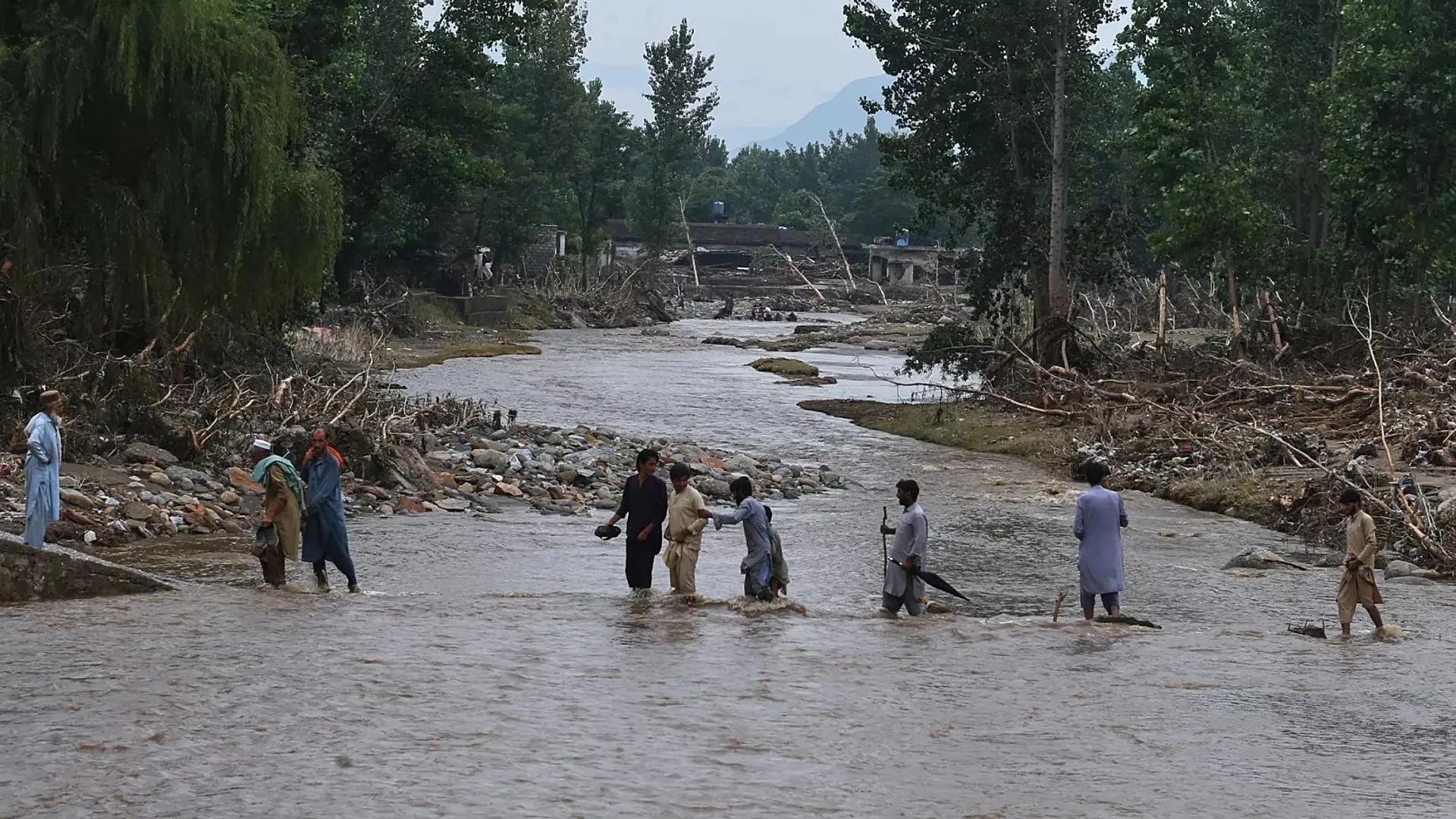
These extreme weather phenomena involve an enormous amount of rain falling within a very limited time frame over a small geographic area. The result is often sudden and severe destruction, including flash floods, landslides, and mudflows that have repeatedly caused major loss of life.
In Pakistan’s north-western Buner district, a powerful cloudburst reportedly killed up to 300 people. The extreme rainfall overwhelmed the terrain, triggering violent flooding and slope failures. Large boulders were dislodged from steep mountainsides and swept into villages, destroying homes and leaving entire settlements in ruins.
Across the border in India, similar disasters have been recorded. In Uttarakhand, a Himalayan state highly exposed to extreme weather, cloudbursts have sent torrents of water rushing down mountain slopes, striking villages such as Dharali. The region has experienced devastating past events as well, including a 2013 disaster in which over 6,000 people lost their lives and thousands of villages were affected.
Understanding Cloudbursts
A cloudburst is a severe meteorological event characterized by extremely heavy rainfall occurring in a very short time span. Typically, it is defined as more than 100 millimetres of rain falling within one hour over a localized area of roughly 30 square kilometres.
These events are sudden, violent, and capable of producing destruction comparable to hours of continuous rainfall compressed into minutes. They are often described as a “rain bomb,” where a cloud releases its stored moisture almost instantaneously.
Cloudbursts form under specific atmospheric conditions, including warm, moisture-rich air rising rapidly, unstable pressure systems, high humidity, and strong convective cloud development. When this rising air encounters mountainous terrain, it is forced upward, where it cools and condenses into dense cloud formations capable of holding large volumes of water.
Mountain ranges such as the Himalayas, Karakoram, and Hindu Kush act as physical barriers that trap moisture-laden air. These conditions prevent clouds from dispersing, allowing moisture to accumulate until it is suddenly released in an intense downpour.
Why India and Pakistan Are Especially Vulnerable
India and Pakistan are highly susceptible to cloudbursts due to the combination of monsoon systems, abundant atmospheric moisture, and extensive mountainous landscapes.
The South Asian monsoon typically brings seasonal rainfall between June and September, with a secondary phase occurring later in the year. However, climate change has significantly altered these patterns, making rainfall less predictable and more extreme.
Rising temperatures allow the atmosphere to hold more moisture, particularly from the Arabian Sea and Indian Ocean. Instead of steady, prolonged rainfall, precipitation is increasingly occurring in short, intense bursts separated by dry periods.
As moist air masses move inland and collide with mountainous terrain, they are forced upward, triggering rapid condensation and creating ideal conditions for cloudburst formation.
Forecasting Challenges and Safety Measures
Experts emphasize that cloudbursts remain extremely difficult to predict due to their small scale, sudden onset, and complex atmospheric processes. A senior official from Pakistan’s Khyber Pakhtunkhwa province has stated that no forecasting system currently exists capable of predicting the exact timing and location of such events.
Even where early warning systems are in place, the speed and intensity of these downpours can overwhelm response efforts, leaving little time for evacuation.
Despite these limitations, authorities and community organizations stress that preventive measures can reduce risk. Recommendations include avoiding construction near rivers and valleys, postponing travel to mountainous regions during heavy rain forecasts, preparing emergency kits, and avoiding night travel in hilly areas. Environmental strategies such as afforestation and improved drainage management are also encouraged to reduce flood impacts.
Climate Change Driving Increased Frequency
Scientific evidence suggests that cloudbursts are becoming more frequent and more destructive due to climate change. Rising global temperatures increase the atmosphere’s moisture-holding capacity, which enhances the potential for extreme rainfall events.
Research indicates that for every 1°C rise in temperature, the atmosphere can hold approximately 7% more moisture, significantly increasing the likelihood of intense precipitation events.
In addition, warming of the Indian Ocean and Arabian Sea contributes extra moisture to the atmosphere, while melting glaciers and shifting snow patterns further destabilize regional climate systems. Environmental degradation, including deforestation and wetland loss, reduces the land’s ability to absorb water, worsening flash flood impacts.
Experts warn that climate change is fundamentally intensifying the hydrological cycle. As one climate specialist noted, rising global temperatures are increasing atmospheric moisture, destabilizing mountain environments, and making extreme rainfall events both more frequent and more destructive than in the past.