
World Court Says Countries May Breach International Law if They Fail to Act on Climate Change
The International Court of Justice has issued a landmark advisory opinion stating that nations could be violating international law if they fail to take sufficient action to address climate change and protect the environment.
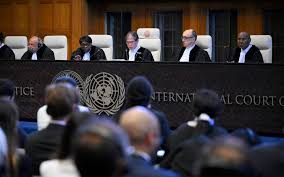
In its ruling delivered in The Hague, the Court emphasised that governments have a legal responsibility to safeguard the climate system. It warned that failing to act appropriately to limit greenhouse gas emissions could constitute an internationally wrongful act.
The judges also highlighted the scale of the crisis, describing climate change as a fundamental global threat that endangers ecosystems, human health and life on Earth. The opinion, supported unanimously by all 15 judges, is being viewed as a major development in international climate law.
Legal consequences and human rights dimension
The Court stated that countries responsible for climate harm may be required to provide reparations to those affected. It also reinforced the principle that a clean, healthy and sustainable environment is a fundamental human right, strengthening the legal basis for future climate-related cases.
Although the opinion is not legally binding, it carries significant authority and is expected to influence both international negotiations and domestic legal actions. Governments could now face increased pressure from citizens, other states and courts to comply with climate obligations.
A milestone driven by vulnerable nations
The case was initiated by the Pacific island nation of Vanuatu and supported by more than 130 countries, reflecting growing concern among nations most vulnerable to rising sea levels and extreme weather.
Advocates and activists welcomed the decision, describing it as a turning point that strengthens accountability for countries contributing to climate change. Many see it as a powerful new legal tool that can be used to demand stronger climate action and justice for affected communities.
Global reaction and future implications
António Guterres praised the ruling as a historic step forward, highlighting its importance for climate justice and the influence of youth-led movements that helped bring the case to the Court.
Legal experts suggest the opinion could play a crucial role in upcoming international climate negotiations, including COP30, by increasing pressure on governments to adopt more ambitious policies. It may also lead to a rise in lawsuits against states that fail to meet their environmental responsibilities.
At the same time, some major fossil fuel-producing countries remain resistant to stronger legal obligations on emissions reductions, reflecting ongoing divisions in global climate policy.
A growing legal framework for climate action
The ruling adds to a series of recent legal decisions reinforcing the responsibility of governments to address climate change. Courts in various regions have increasingly recognised the link between environmental protection and human rights, signalling a broader shift toward legal accountability.
Despite this progress, the Court acknowledged that legal measures alone will not be enough to resolve the climate crisis, stressing that coordinated global action across all sectors is essential to secure a sustainable future.