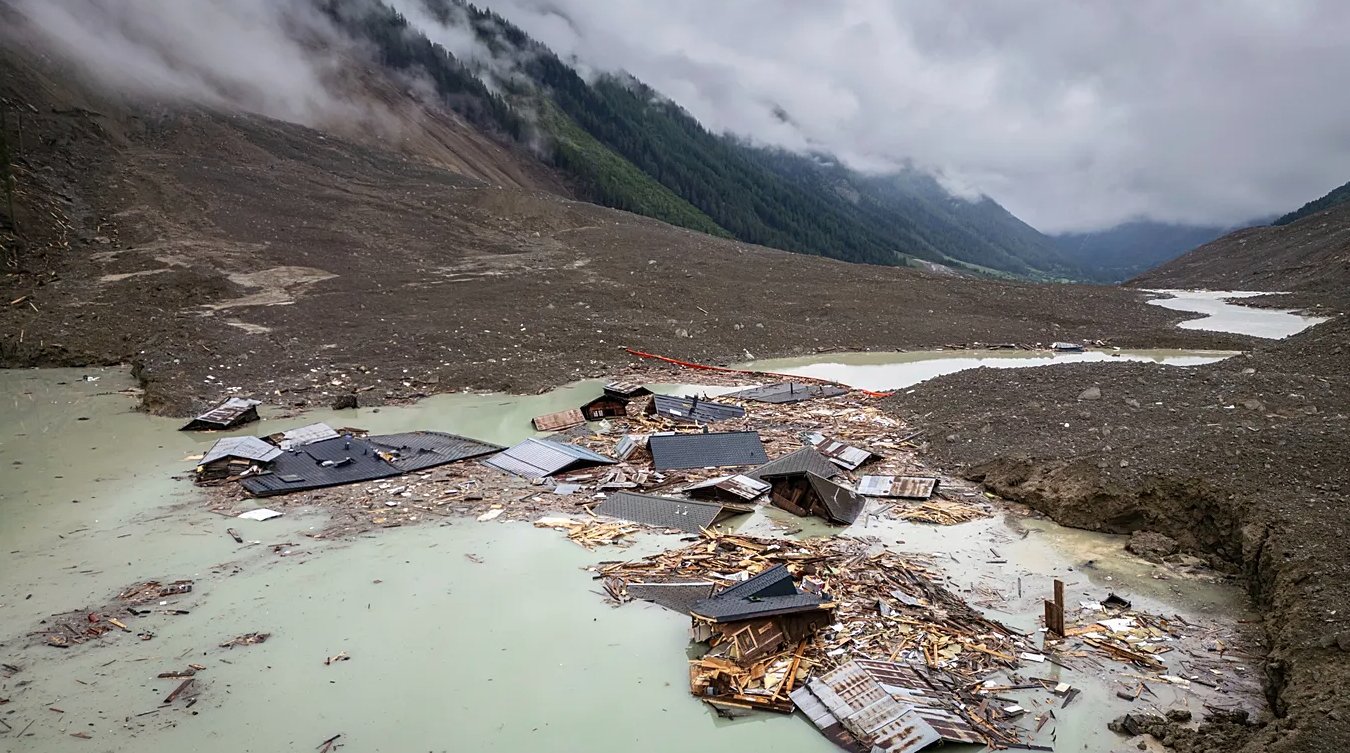
Climate change was no longer an abstract warning this year. It was visible, measurable and increasingly disruptive — even as governments wavered on how decisively to respond.
A record-breaking climate year
According to the World Meteorological Organization, the past 11 years now rank as the warmest ever recorded, with 2025 likely finishing as either the second or third warmest year on record. Preliminary data from the Copernicus Climate Change Service suggests that each of the past three years has temporarily exceeded the 1.5°C warming threshold set by the Paris Agreement.
The driver is clear: greenhouse gas concentrations reached new highs in 2025. Emissions from fossil fuel combustion, deforestation and industrial agriculture continued to trap heat faster than the planet can release it, pushing global temperatures steadily upward.
Climate denial returns to centre stage
The political year opened with the return of Donald Trump to the White House — and with it, a renewed assault on climate policy. Within days, the US once again withdrew from the Paris Agreement and lifted restrictions on liquefied natural gas (LNG) export approvals.
In a speech to the United Nations General Assembly, Trump dismissed renewable energy as "too expensive" and labelled climate change "the greatest con job ever perpetrated on the world". US LNG exports surged as a result, with the country supplying nearly half of Europe's imports in 2025 — despite mounting evidence that LNG's lifecycle emissions can exceed those of coal.
While the US backtracked, China moved cautiously in the opposite direction. Analysis by Carbon Brief indicates that Chinese CO₂ emissions have remained flat or declined for 18 consecutive months. Massive renewable expansion, alongside falling emissions from steel, cement and transport, has raised the possibility that China may be nearing its emissions peak.
Europe's climate contradictions
In Brussels, climate policy resembled a puzzle with missing pieces. The EU finally agreed to a legally binding target to cut greenhouse gas emissions by 90% by 2040 compared with 1990 levels — yet days later weakened plans to phase out combustion engine cars by 2035.
The much-criticised "Omnibus I" package, introduced as a regulatory simplification effort, triggered backlash from environmental groups who warned it undermined hard-won protections. Amnesty International called it a "bonfire of regulation", while NGOs accused the bloc of backsliding under pressure from industry.
COP30: symbolism over substance
Held on the edge of the Amazon rainforest in Belém, COP30 carried high expectations. It was praised for allowing greater space for protest and civil society participation after several summits in more restrictive host countries.
Yet outcomes fell short. The Climate Action Tracker described the summit as "disappointing", noting little change in projected warming pathways. Current policies still place the world on track for around 2.6°C of warming by 2100 — with temperatures continuing to rise beyond that point.
What did emerge, however, were new alliances among climate-ambitious countries, signalling a shift toward coalition-based action as consensus within the UN framework becomes harder to reach.
Ice loss accelerates across the planet
Beyond politics, the physical changes of 2025 were stark. Researchers at ETH Zürich warned the world is entering a phase of "peak glacier extinction", with glaciers in the Alps, Andes and Rockies facing irreversible decline. Venezuela officially lost its last remaining glaciers this year.
In Greenland, ice melt began nearly two weeks earlier than average and continued into September, contributing to the loss of over 100 billion tonnes of ice. Antarctic researchers, using the British research submarine Boaty McBoatface, detected unexpectedly warm waters beneath the Dotson Ice Shelf — raising alarms over future instability.
Sea levels continued their upward climb. After a record 5.9mm rise in 2024, coastal communities worldwide intensified calls for protection, from South Carolina to Southeast Asia.
Extreme weather becomes the norm
Floods and landslides struck Mexico, Sri Lanka, Indonesia and Malaysia, displacing hundreds of thousands. Hurricane Melissa devastated parts of the Caribbean, while prolonged droughts turned large areas of the Middle East into dust bowls.
In Europe, wildfires released record levels of carbon dioxide, while heatwaves pushed temperatures beyond historic limits. Finland endured weeks above 30°C, Türkiye set a national record of 50.5°C, and Japan registered its hottest day ever at 41.8°C.
What lies ahead
Looking to 2026, the UK Met Office forecasts another year among the four warmest on record. Scientists warn that sustained temperatures above 1.4°C — once considered exceptional — are becoming the new normal.
Hope now rests on upcoming political moments, including the first global conference on a "Just Transition Away from Fossil Fuels" in Colombia. Whether these efforts can close the widening gap between climate science and political action remains the defining question.