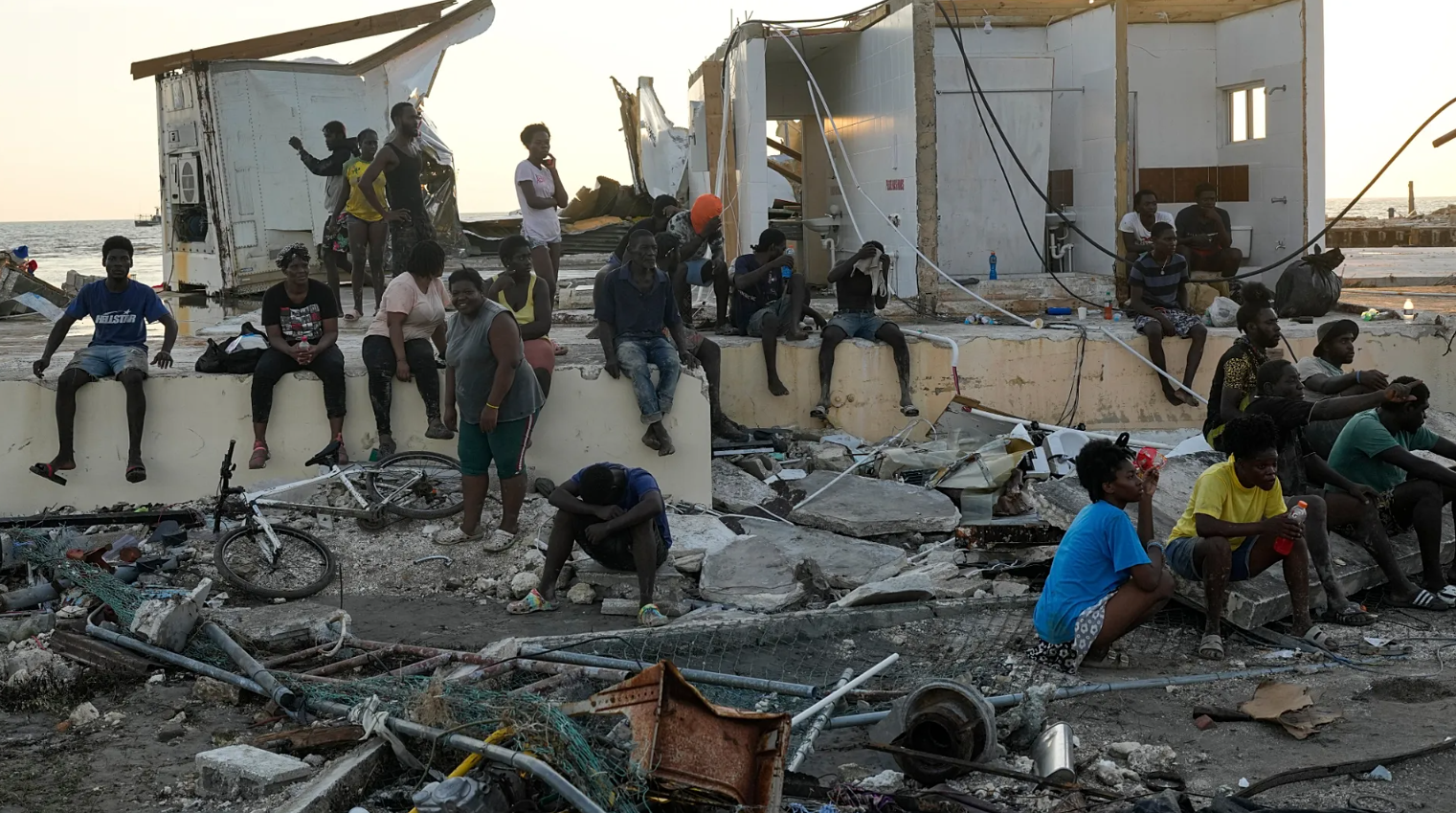
Melissa was among the most powerful Atlantic hurricanes to ever make landfall, battering Jamaica, Haiti, the Dominican Republic and Cuba with torrential rain and winds nearing 300 km/h. The storm caused widespread damage — tearing off roofs, flooding homes, cutting off roads, and destroying farmland — and left dozens dead.
A rapid attribution study by World Weather Attribution (WWA) found that global warming increased Melissa's maximum wind speeds by around 7% and intensified rainfall by 16%. The conditions that allowed the storm to strengthen — warmer air and unusually hot seas — were estimated to be six times more likely due to climate change than in a pre-industrial climate.
Oceans gave Melissa extra fuel
Melissa tracked slowly across the Caribbean, drawing immense energy from water temperatures roughly 1.4°C above pre-industrial levels. According to WWA scientist Theodore Keeping, those warmer seas acted as a "power source" for the storm.
"Warmer ocean temperatures are effectively the engine that drives a hurricane," Keeping explained. "The hotter the water, the greater the wind speeds a storm can achieve."
Melissa was the fourth Atlantic storm this year to undergo rapid intensification — when a cyclone's wind speeds surge by at least 30 knots (around 55 km/h) in just 24 hours. Scientists say this phenomenon is becoming more frequent as the planet heats.
Stronger storms, greater damage
Keeping said that, in a world without human-caused climate change, Melissa's winds would have been roughly 16 km/h weaker, reducing the destruction it caused. "We know that stronger winds directly translate into higher economic and human losses," he noted.
Researchers have increasingly tied rapid hurricane intensification to global warming. Rising concentrations of greenhouse gases trap heat, warming the oceans and increasing the amount of moisture the atmosphere can hold — both of which fuel storms to grow faster and more violent.
"It's like wringing out a sponge — and climate change is making that sponge even bigger," said Brian Tang, an atmospheric scientist at the University at Albany, who was not involved in the WWA study. He described the research as methodologically solid and praised its attempt to connect wind speed increases to actual damage — "a complex but critical link."
Andrew Dessler, professor of atmospheric sciences at Texas A&M University, said the WWA findings align with decades of climate science. "This is entirely consistent with what we expect to see as the world warms," he said.
A glimpse into the future
Dessler added that rapid attribution studies like this one play an important role in helping the public and policymakers understand climate change's fingerprints on extreme weather soon after disasters strike. "They offer a valuable first look before more detailed analyses are completed," he said.
For many experts, what made Melissa alarming was its peak sustained winds of 298 km/h — an exceptionally rare intensity. "If storms like this are a preview of what's to come, the outlook is deeply concerning," Dessler warned.