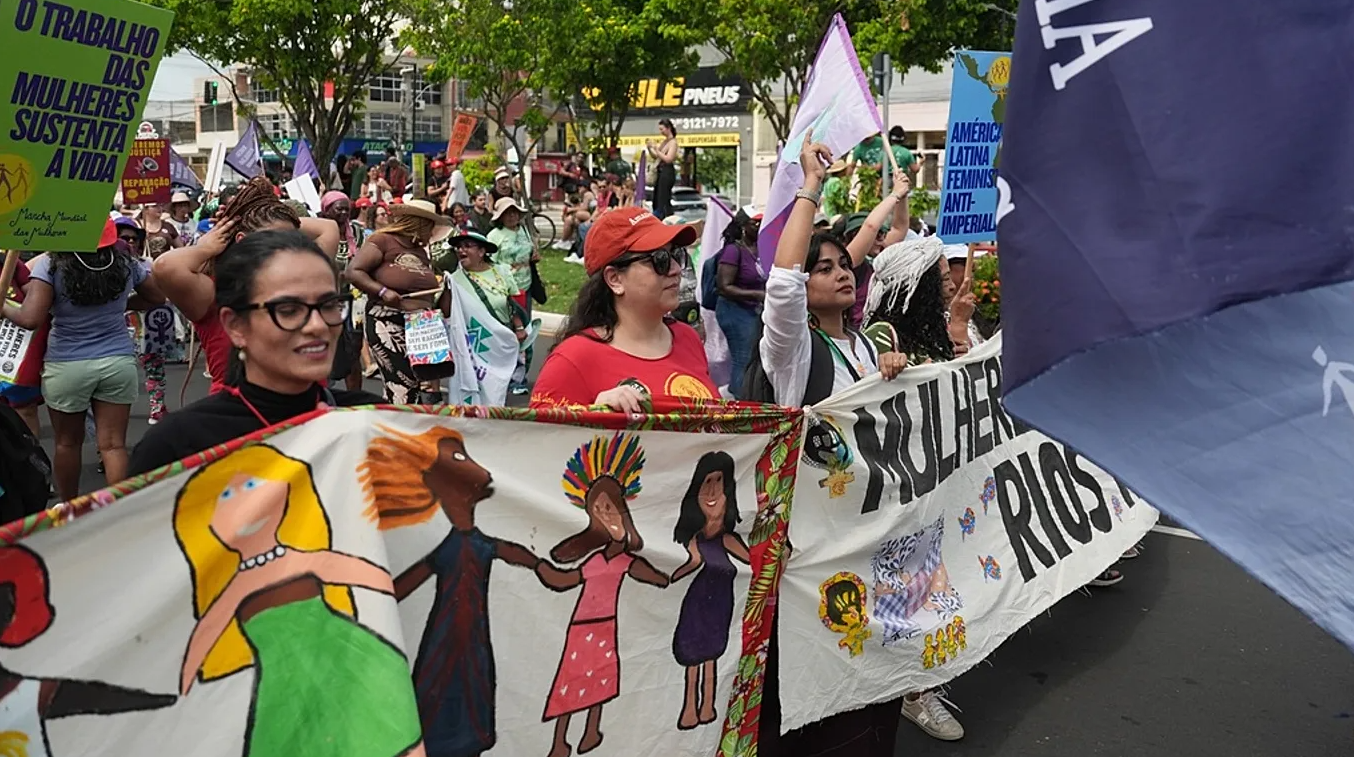
Thousands of demonstrators, including youth groups, environmental organisations and Indigenous communities, marched to the perimeter of the conference venue in a peaceful protest that briefly blocked access to the site. Their message was clear: those experiencing the worst effects of global heating must have a seat at the table.
Members of Fridays for Future spoke about the accelerating impacts of climate change in their home countries and criticised the lack of youth representation in formal talks.
"For us — the generation inheriting this planet — it is deeply frustrating," said Rachelle Junsay of Climate Action Philippines. "Decisions are being made in air-conditioned rooms by people who won't face the consequences. Meanwhile, the real victims, the real communities, are excluded from the conversation."
First authorised mass protests at climate talks since 2021
The demonstrations mark the first time in three years that protesters have been permitted to gather outside a UN climate summit — a notable shift after heavily restricted protests at recent conferences in Azerbaijan, the UAE and Egypt.
Earlier in the week, tension briefly escalated when protesters encircled the venue on two separate occasions, leaving two security guards with minor injuries. Saturday's march, however, remained peaceful, halting just short of the conference gates as delegates convened for a full day of negotiations.
For many attending, Belém offered a sense of openness not seen at previous COPs.
"This is the largest climate march I've ever joined," said 27-year-old youth leader Ana Heloisa Alves. "You simply cannot ignore this many people."
Alves said she was marching to defend the Tapajós River, an area the Brazilian government intends to develop commercially. Protesters held signs declaring: "The river belongs to the people."
Pablo Neri, a regional coordinator for the Movimento dos Trabalhadores Rurais Sem Terra in Pará state, argued that the climate process must better reflect a movement increasingly shaped by grassroots mobilisation. "These talks need to involve ordinary people if they're to reflect the reality of the climate struggle," he said.
Low expectations for major breakthroughs
The COP30 negotiations are scheduled to run until Friday, 21 November. Analysts, however, expect few significant breakthroughs, even as pressure mounts on countries to uphold existing commitments — particularly on climate finance for vulnerable nations.
Notably absent from this year's conference is the United States. President Donald Trump, who has dismissed climate change as a "hoax" and previously withdrew the US from the 2015 Paris Agreement, has declined to participate — a move that has drawn criticism from delegates and observers.
As negotiations continue, protesters say they will keep pushing from outside the gates. Their demand is simple: hear us — and act.