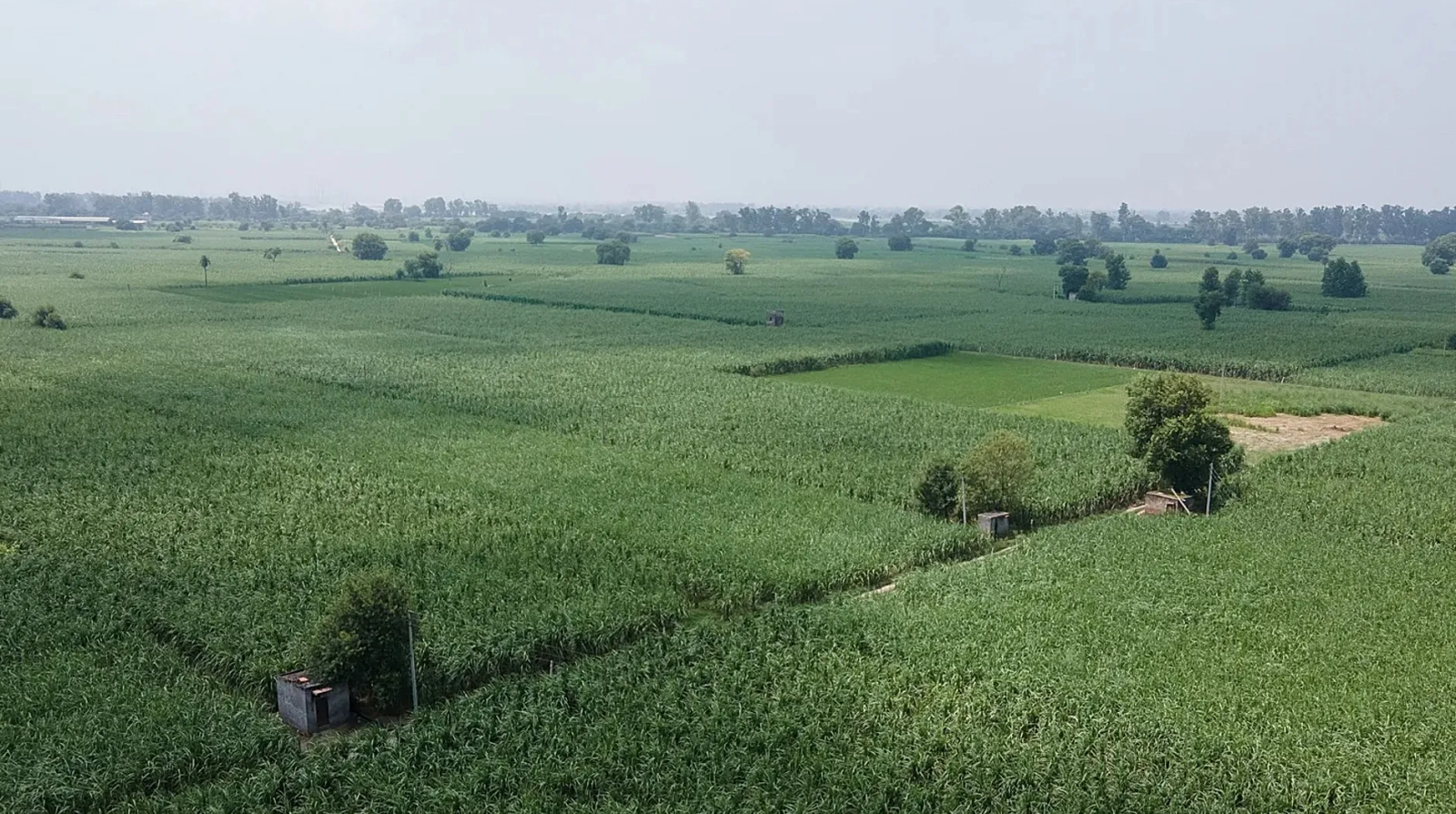
Unveiling an updated bioeconomy strategy this week, Environment Commissioner Jessika Roswall said the EU must accelerate the shift toward plant-based food systems, natural medicines, biofuels, bioplastics and construction materials sourced from crops, forests and agricultural residues.
"The bioeconomy is not science fiction," Roswall said, arguing that natural resources must be used "more intelligently" if the bloc is to cut fossil fuel use and remain competitive by 2040.
A booming sector with bigger ambitions
The EU's bioeconomy — spanning agriculture, forestry, food production, biotechnology and biomaterials — generated €2.7 trillion in revenue and supported 17 million jobs last year, a dramatic rise from 2022.
The new strategy aims to streamline approvals for innovative products, expand funding in the next EU budget cycle and fast-track market access by clearing barriers inside the single market.
Officials say a central focus will be boosting the use of secondary biomass — such as forest residues, food waste and byproducts — to reduce the need for primary crops and timber.
A new European Bioeconomy Regulators and Innovators' Forum will be established to accelerate authorisation processes and help SMEs scale up new technologies.
Hopes for cleaner construction and greener materials
The Commission highlights the construction sector as a major opportunity: buildings account for over 35% of EU waste and up to 12% of national greenhouse gas emissions.
Materials such as engineered wood, hemp, straw, fungal mycelium and fibre-based composites could cut embodied carbon and reduce energy demand in buildings by roughly 40%, the strategy suggests.
Biorefineries — which convert agricultural waste and residues into chemicals, fuels or biomaterials — could also help replace critical raw materials, including components for batteries. But these plants require heavy investment and careful coordination of feedstock supply, the Commission admits.
The EU is also pushing for the scale-up of bioplastics, long held back by inconsistent standards and regulatory confusion. Industry leaders say clearer definitions and market rules could finally unlock wider adoption.
Environmental groups warn of a dangerous paradox
Green NGOs say the Commission risks repeating past mistakes by promoting bio-based growth without addressing the limits of Europe's natural resource base.
Zero Waste Europe's Aline Maigret praised the strategy's ambition but cautioned that a true circular bioeconomy must operate within planetary boundaries.
"Promoting bio-based packaging without tackling the environmental pressures of intensive forestry and agriculture is a no-go," she said.
Forest-focused NGO Fern echoed the warning, noting that Europe's wood supply is already under strain due to climate impacts, biodiversity loss and decades of poor forest management.
"The Commission should be clear that forests cannot deliver endless biomass," Fern said, adding that much of the world's biomass lies outside Europe — raising concerns about shifting environmental pressures abroad.
The European Environment Bureau's Eva Bille was more blunt, accusing the Commission of ignoring the structural limits of nature.
"The idea that we can simply substitute current levels of consumption with bio-based inputs is an illusion," she said. "This approach risks causing immediate and serious harm to ecosystems."
She also pointed to the EU's reliance on imported feed — over 70% of animal feed is sourced from outside the bloc — as evidence that Europe's resource footprint already far exceeds its domestic capacity.
Competition or conservation?
Industry argues bioenergy and biomaterials are essential for a fossil-free economy. Environmental groups counter that without strong safeguards, Europe's new bioeconomy could accelerate resource depletion, degrade forests and undermine the climate goals it is meant to support.
With the EU preparing its next long-term budget and a Circular Economy Act scheduled for 2026, the battle between competitiveness and conservation is only just beginning.