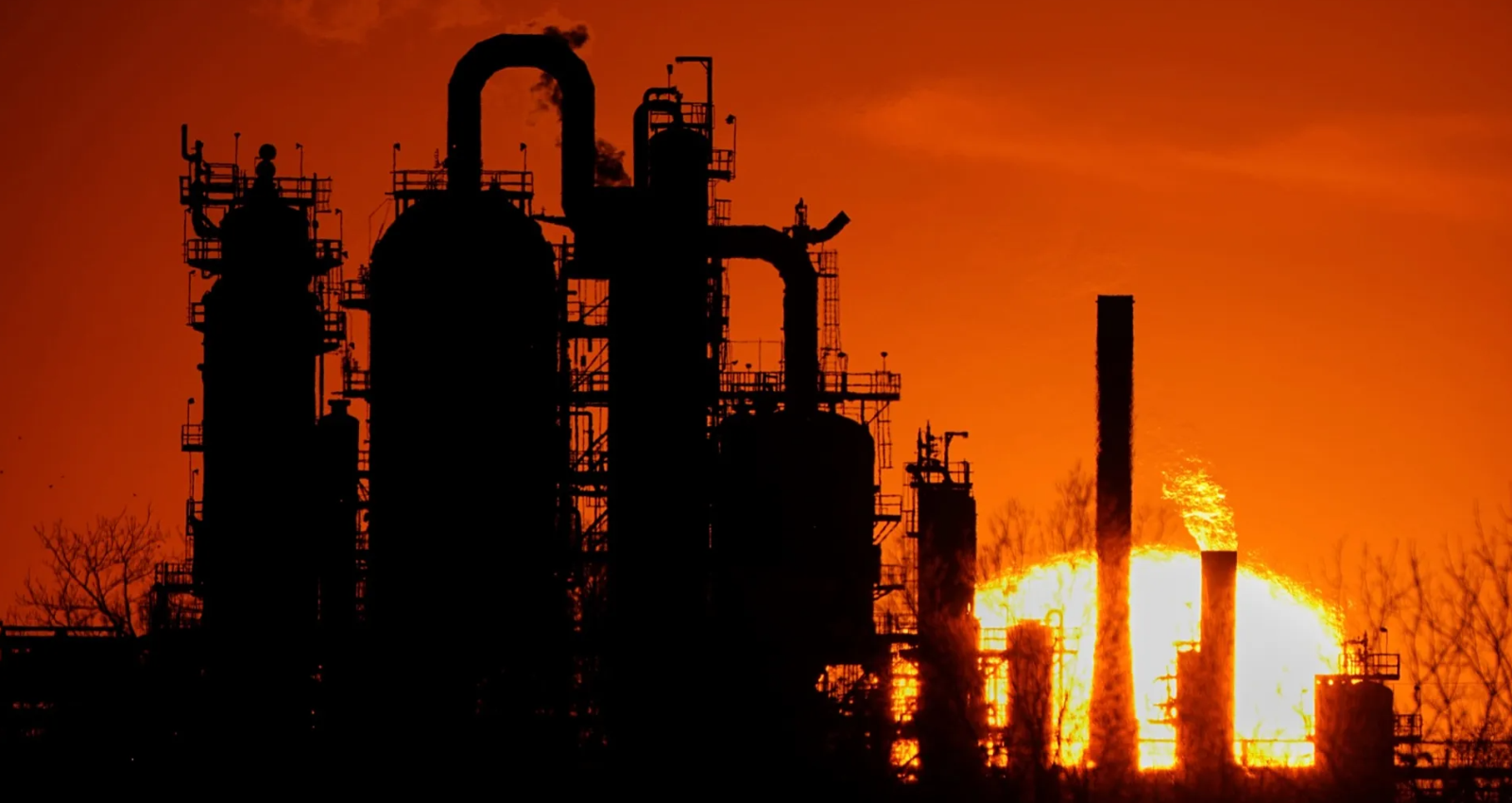
Despite record investment in clean energy, scientists warn that global emissions are still rising. Progress toward a fossil-free future, they say, is simply "not happening fast enough." But agreeing on how — and how quickly — countries should transition remains politically fraught, especially for nations whose economies and energy systems still rely heavily on fossil fuels.
A decade-long debate reaches boiling point
The argument over a fossil fuel exit plan has been building for years. At COP28 in Dubai, nearly 200 nations acknowledged — for the first time ever — the need to shift away from fossil fuels in a "just, orderly and equitable" manner. But the text imposed no obligations, and momentum stalled entirely last year at COP29 in Azerbaijan, where countries failed to agree on language describing what a phaseout would actually look like.
That deadlock angered climate advocates, who accused fossil-fuel-dependent countries of rolling back previous commitments.
With COP30 ending in just days, negotiators are now under intense pressure to produce a concrete timeline.
Brazil's Lula puts the issue back at centre stage
On Tuesday, Brazilian President Luiz Inácio Lula da Silva re-energised the debate by calling for a global roadmap to move beyond fossil fuels — but urged a flexible, country-by-country approach.
"We need to show society that we want this without imposing anything on anyone," Lula said. "Each country knows its own possibilities. But we must start thinking about how to live without fossil fuels."
Although the issue was not formally on the COP30 agenda, political momentum has grown rapidly as the summit has unfolded.
A growing coalition backs a global roadmap
On 18 November, ministers from more than 20 countries gathered — led by Denmark — to publicly call for COP30's final agreement to include a negotiated plan for transitioning away from fossil fuels.
That coalition now includes more than 80 countries, from major European economies to climate-vulnerable Pacific Island nations, and emerging economies like Colombia and Kenya.
Europe pushes hard for ambition
Most EU countries have aligned behind the roadmap, including France, Germany, the Netherlands, Spain, Sweden, Portugal and others.
EU Climate Commissioner Wopke Hoekstra said the bloc "very much supports" the idea, warning the world is "coming dangerously close to destructive tipping points."
The EU has also tabled its own proposal: a broad energy roadmap to be jointly developed by current and future COP presidencies, accompanied by annual progress reports and accelerated implementation of commitments from COP28.
The UK echoed that call. Speaking in Belém, Energy Secretary Ed Miliband argued bluntly:
"We cannot sweep this under the carpet. This is the moment to advance what we agreed at COP28."
But opposition is looming
For any roadmap to be adopted, all 198 participating nations must agree — and several powerful holdouts remain.
The United States, the world's largest historical emitter, is not attending COP30. Canada, still approving new fossil fuel projects, has not signalled support.
Across the Middle East, countries like Saudi Arabia are expected to oppose even mild phaseout language.
In Asia, Japan is promoting a model that uses hydrogen and ammonia as "decarbonised fuels" to prolong fossil-fuel power generation — a strategy critics call an expensive distraction.
"You might as well mix dollars with coal and burn them, calling it a biofuel," said energy analyst Paul Martin.
Why health experts say the phaseout is urgent
The push to end fossil fuels isn't coming only from environmental groups. Global health organisations — representing doctors, nurses and medical students worldwide — describe it as a "public health imperative."
A new report presented at COP30 found that exposure to fossil-fuel pollution increases risks of premature birth, congenital abnormalities, asthma, respiratory infections and cardiovascular disease.
"Every year of delay means more asthma attacks, more cancers, and more preventable deaths," said Dr Joe Vipond of the Canadian Association of Physicians for the Environment.
"Transitioning away from fossil fuels isn't just climate policy — it's life-saving health policy."
Can COP30 deliver?
With negotiations in Belém entering their final days, diplomats warn the window for a breakthrough is shrinking. Whether COP30 can agree on a unified roadmap — or whether fossil fuel politics once again derail progress — will define the success of this summit.
But one thing is clear: for the first time in years, momentum for a fossil fuel phaseout is growing. Whether that momentum becomes policy depends on what happens in the final hours of COP30.