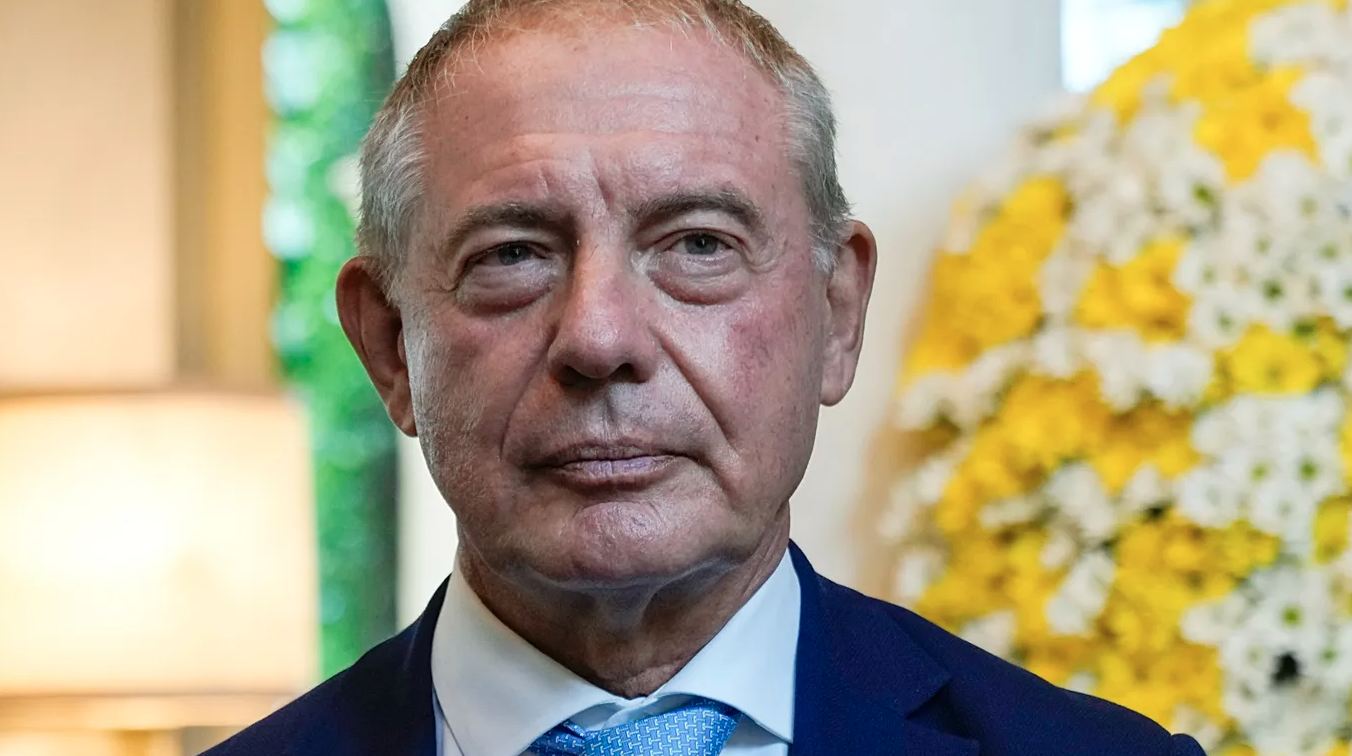
Speaking in Brussels on Thursday, Italy's industry minister Adolfo Urso urged the European Commission to freeze the EU's Emissions Trading System (ETS) until a broader reform proposal is unveiled later this year. The current system, he said, has become a punitive burden for energy-intensive sectors struggling to compete globally.
The ETS forces companies to pay for carbon emissions with the aim of cutting pollution and accelerating investment in cleaner technologies. It currently covers power generation, heavy industry, aviation and shipping, with plans to expand its scope further under an upcoming review.
Urso, however, described the scheme as having a "perverse effect", claiming it now functions less as a climate tool and more as a de facto tax on European manufacturers.
"As it stands, the ETS is simply a tariff imposed on energy-intensive companies that are already fighting to survive," he said. "If Europe is facing the collapse of key industrial sectors, we cannot wait years for negotiations while damage continues."
Italy's intervention comes amid growing unease among parts of Europe's industrial base over persistently high electricity prices and carbon costs, particularly when competing with producers in China and the United States, where climate regulation is less stringent.
The Italian minister said he would formally ask the European Commission to suspend the ETS while a comprehensive reform is prepared, warning that incremental adjustments would not be sufficient to address what he called a "systemic crisis" of competitiveness.
Divisions across Europe
Italy's position echoes concerns previously raised by German chancellor Friedrich Merz, who recently suggested that easing pressure on the carbon market could help industry, before later retreating from the proposal amid political backlash.
But the call for suspension has exposed sharp divisions within Europe. A coalition of Nordic industry groups has urged Brussels to resist pressure to weaken the ETS, arguing that the system provides long-term certainty and a strategic advantage for European clean-tech investment.
In a joint letter addressed to Commission president Ursula von der Leyen and climate commissioner Wopke Hoekstra, industry associations from Finland, Sweden, Denmark and Norway described the ETS as a "market-based and technology-neutral" instrument that underpins Europe's climate leadership.
They warned that abrupt changes risk destabilising investment decisions at a time when the EU needs massive capital flows into renewable energy, electrification and industrial decarbonisation.
"Reforming the system requires care," the letter said, noting that ETS revenues are central to funding clean infrastructure and reducing long-term exposure to volatile fossil fuel prices.
Since its launch in 2005, the ETS has cut emissions in covered sectors by nearly 40% and generated more than €260bn in revenues, according to EU figures.
Critics warn of long-term risks
Economists and climate policy experts have also pushed back against Italy's proposal. Carlo Carraro, professor emeritus at Ca' Foscari University of Venice, warned that undermining the ETS could weaken one of Europe's most effective climate policies.
"Innovation and competitiveness are now inseparable from decarbonisation," he said. "Delaying the transition increases technological and financial risks for businesses rather than reducing them."
Similar concerns were voiced by Chiara di Mambro of the environmental thinktank ECCO, who argued that suspending the ETS or subsidising fossil gas would ultimately push energy prices higher by prolonging dependence on volatile imports.
She suggested instead that governments should use fiscal revenues or windfall profits from energy companies to shield households and firms from electricity costs, without weakening carbon price signals.
With the European Commission preparing a review of the ETS later this year, Italy's call has sharpened a broader debate over whether Europe's climate ambition is an economic liability — or a foundation for long-term resilience in an increasingly unstable global energy system.