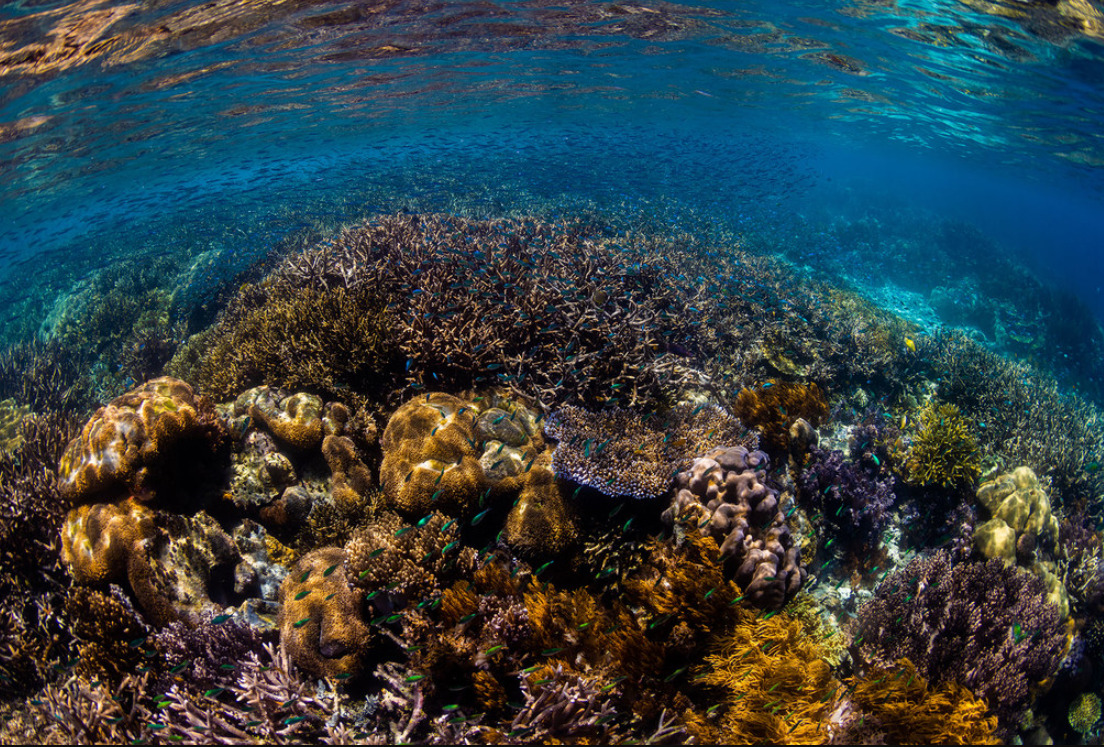
Formally titled the Biodiversity Beyond National Jurisdiction (BBNJ) Agreement, the legally binding UN treaty applies to ocean regions outside national waters — commonly referred to as the high seas — as well as the international seabed.
Together, these areas account for more than two-thirds of the planet's ocean surface and over 90% of Earth's living space by volume, reflecting the vastness of marine ecosystems that lie beyond the control of individual states.
UN Secretary-General António Guterres described the agreement as a long-overdue response to mounting global pressures, saying it closes a critical gap in ocean governance and offers a framework for safeguarding marine ecosystems for future generations. He called on countries to move quickly toward full and universal implementation.
Why the treaty matters
The BBNJ Agreement is designed to ensure that the high seas and international seabed are used sustainably and managed for the collective benefit of humanity, rather than being exploited without oversight.
It is the first legally binding international ocean treaty to embed inclusive governance principles, including provisions that recognise the role of Indigenous Peoples and local communities, as well as commitments to gender balance in decision-making processes.
Supporters argue that once fully implemented, the agreement could play a crucial role in tackling the interconnected global crises of climate change, biodiversity loss and marine pollution.
Tanzanian diplomat Mzee Ali Haji, who led his country's negotiating team during the talks, said the treaty represents a turning point for the protection of international waters.
"There is now accountability for activities on the high seas," he said, noting that environmental damage such as pollution would carry clear responsibility under the new framework.
Building on existing law
The BBNJ strengthens the current international legal system governing the oceans, expanding on the UN Convention on the Law of the Sea — often described as the constitution of the oceans — which has guided maritime activity since 1994.
While the convention set broad rules for seabed use and marine protection, the new agreement adds detailed mechanisms for conserving biodiversity and aligns ocean governance with contemporary challenges, including climate change and the UN's 2030 Agenda for Sustainable Development.
What ‘entry into force' means
With the treaty now in force, it becomes legally binding for the 81 countries that have ratified it to date, requiring them to implement its provisions at the national level.
Under the agreement's terms, it entered into force 120 days after at least 60 countries formally ratified it — a threshold reached earlier this year.
Who has joined so far?
The list of ratifying nations includes several major economies, among them China, Germany, Japan, France and Brazil.
China's participation is seen as particularly significant given its role in ocean-related industries such as shipbuilding, fisheries, aquaculture and offshore energy. UN trade data shows China exported around $155 billion worth of ocean-related goods in 2023.
Major economies still on the sidelines
Several influential countries have yet to ratify the treaty. The United States, the world's largest economy and one of the top exporters of ocean-related goods, signed the agreement in 2023 but has not secured Senate approval.
India adopted the treaty in 2024, but domestic legislation required for ratification remains pending. The United Kingdom introduced related legislation in 2025, though parliamentary approval has not yet been completed.
Russia remains among a small group of countries that have neither adopted nor ratified the agreement, citing concerns about preserving existing governance structures and ensuring freedom of navigation in international waters.
Is the treaty weakened by these absences?
Despite the hesitation of some major powers, negotiators involved in the process remain optimistic about the treaty's impact.
Haji stressed that developing nations and small island states stand to benefit significantly, particularly if financial and technical support is made available.
"The protection of the high seas is a shared responsibility," he said, adding that countries currently holding back may eventually join once the benefits become clear.
What comes next?
The agreement remains open for further ratification, which supporters say will strengthen its effectiveness over time.
Beyond participation, the central challenge will be enforcement — ensuring that rules are applied and violations addressed.
According to the treaty text, the first formal meeting to review implementation and compliance will take place within one year of its entry into force, setting the stage for how this landmark accord reshapes the future of global ocean governance.