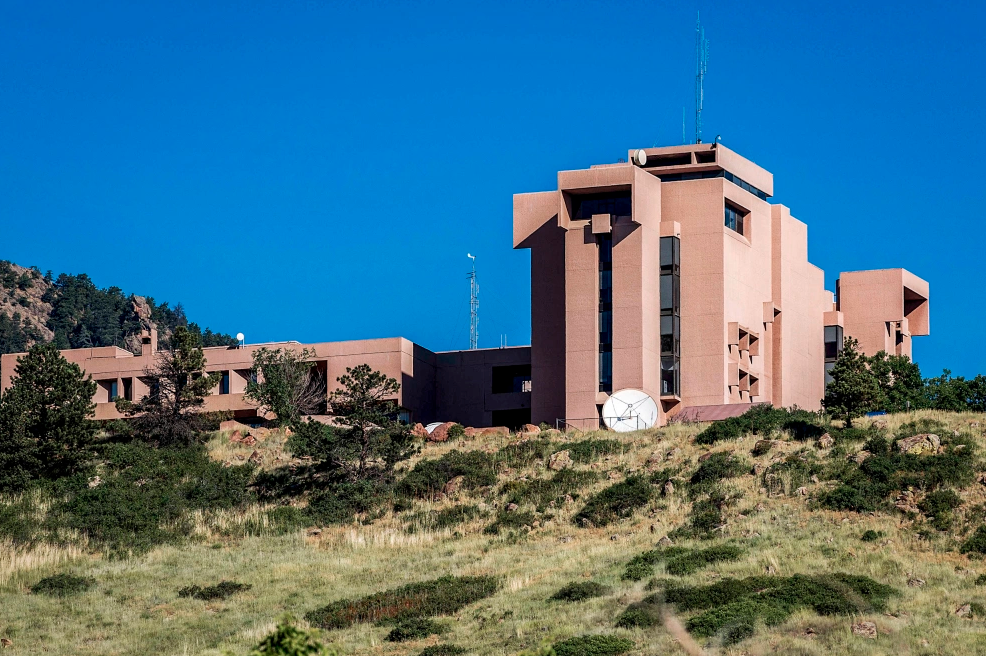
The proposal targets the National Center for Atmospheric Research (NCAR), based in Boulder, Colorado, which has played a central role in atmospheric science for more than six decades.
Russell Vought, director of the White House Office of Management and Budget, said the National Science Foundation intends to break up NCAR, arguing that its work promotes what he described as climate "alarmism". In a public statement, Vought said a review was under way and that activities deemed essential, including weather research, could be relocated or absorbed by other institutions.
If implemented, the move would represent one of the most far-reaching efforts yet by the administration to curb federally supported climate research, at a time when international bodies and governments are warning that the window to prevent the worst impacts of global warming is narrowing.
Uncertainty over the future of NCAR
NCAR's parent body, the University Corporation for Atmospheric Research, said it was aware of reports about plans to dismantle the centre but had not received formal details. Its president, Antonio Busalacchi, said the organisation was prepared to engage with the administration and emphasised NCAR's role in supporting public safety and national prosperity.
White House officials, responding to questions about the proposal, framed the decision in political terms, criticising Colorado's Democratic leadership and characterising the research centre as ideologically driven. They argued that breaking it up would eliminate what they called unnecessary climate-related research.
Colorado Governor Jared Polis said the state had not been formally notified of any decision but warned that dismantling NCAR would amount to an attack on science. He stressed that the centre's work extends far beyond climate modelling, providing data critical to forecasting wildfires, floods and other extreme weather events that threaten lives and property.
Polis also cautioned that weakening NCAR could erode the United States' scientific competitiveness and reduce its ability to respond to emerging global risks.
A broader rollback of climate research
The proposal comes amid a wider push by the administration to scale back climate science and cancel clean energy initiatives. President Trump has repeatedly dismissed climate change as exaggerated or fraudulent, despite the near-universal consensus among scientists that the planet is warming rapidly due to human activity.
Data from the National Oceanic and Atmospheric Administration show that the ten warmest years since modern records began in the mid-19th century have all occurred within the past decade, with last year marking the hottest global average temperature on record.
Scientific community reacts with alarm
Researchers across the climate and weather community responded with concern, warning that dismantling NCAR would have consequences far beyond academic research.
Daniel Swain, a climate scientist at the University of California, Los Angeles, described the proposal as a severe blow to American science, saying it would undermine decades of progress in weather forecasting, disaster preparedness and climate modelling.
He noted that NCAR's work underpins early-warning systems for wildfires, floods and extreme storms, with ripple effects extending well beyond the United States.
Other scientists echoed that assessment. Katharine Hayhoe, an atmospheric scientist and chief scientist at The Nature Conservancy, likened the move to removing a keystone from the structure of modern climate science, arguing that generations of researchers worldwide have relied on NCAR's data, models and expertise.
Andy Hazelton, an atmospheric scientist at the University of Miami, called the plan short-sighted, warning that fragmenting NCAR's work would weaken coordination across disciplines that depend on integrated climate and weather research.
Political and legal pushback
Several Democratic lawmakers said they would challenge any attempt to dismantle the centre. Representative Joe Neguse of Colorado, whose district includes NCAR's facilities, described the proposal as reckless and pledged to oppose it using all available legal tools.
Established in 1960 by the National Science Foundation, NCAR was created to study Earth's atmosphere and its interactions with oceans, land surfaces and solar activity. Its researchers have made foundational contributions to understanding air pollution, wildfire behaviour, drought, flooding and long-term climate change.
NCAR scientists also played a key role in early assessments by the Intergovernmental Panel on Climate Change, including the panel's first major report in 1990, which warned of the need to reduce greenhouse gas emissions to avoid the most severe impacts of global warming.
Today, the IPCC brings together thousands of scientists from nearly 200 governments to produce comprehensive assessments of climate science every few years, work that continues to rely heavily on modelling and research methods pioneered at NCAR.
High stakes for US climate science
Researchers warn that breaking up the centre would fragment expertise that has been built over decades and diminish the country's ability to anticipate and respond to climate-driven risks.
As the debate unfolds, the future of one of the world's most influential atmospheric research institutions has become a focal point in the broader struggle over how governments engage with climate science — and whether political priorities will override long-standing scientific infrastructure.