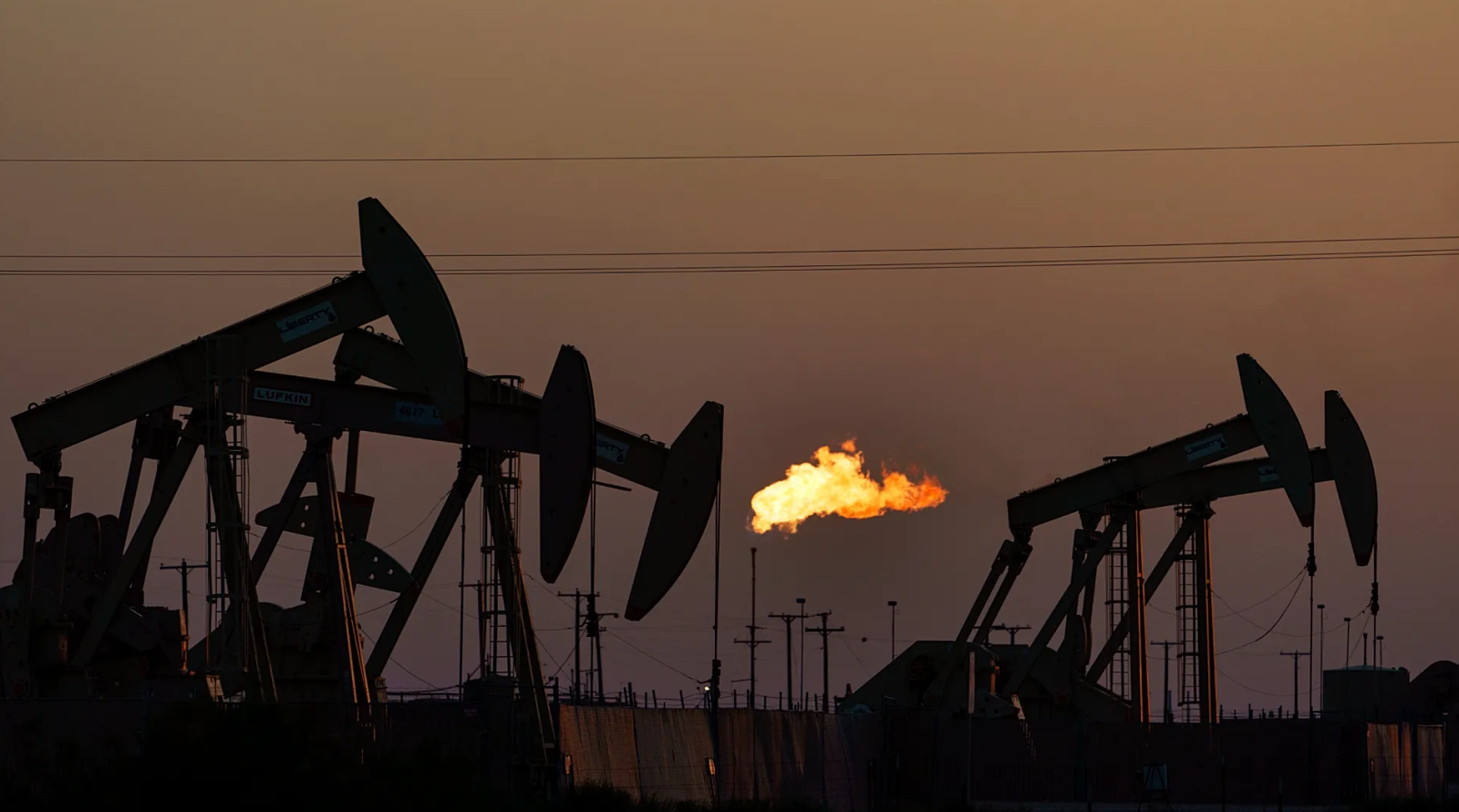
In a letter dated 4 February and seen by reporters, 24 members of Congress called the EU's methane regulation a vital instrument to curb emissions of methane — a highly potent greenhouse gas that traps significantly more heat than carbon dioxide over the short term.
The lawmakers argued that robust and uniform standards for all energy suppliers are necessary to prevent the routine venting and flaring of natural gas, practices that not only worsen climate change but also waste valuable energy resources.
They stressed that applying the same rules to all exporters would help lower trade frictions between countries with stronger environmental safeguards, while rewarding companies that invest in proven methane-reduction technologies.
"We urge the European Commission to prioritise targeted technical cooperation with experts from US federal and state authorities, industry, academia and civil society," the letter states, adding that this approach would be preferable to granting sweeping exemptions that go beyond practical implementation concerns.
Among those backing the appeal are Senators and Representatives Sheldon Whitehouse, Scott Peters, Dan Goldman, Mike Quigley, Jared Huffman, Kathy Castor and Laura Friedman.
Tensions ahead of major energy trade deal
The intervention contrasts sharply with earlier criticism from the US energy secretary, who warned during a visit to Brussels last autumn that the EU's methane rules could disrupt transatlantic energy trade.
It also comes at a sensitive moment in EU–US relations, as the two sides move toward a major trade arrangement under which the EU is expected to purchase roughly $250 billion worth of oil, gas and nuclear energy from the United States each year through 2028 — a total approaching $750 billion.
Commission looks to simplify rollout, not dilute rules
The European Commission has recently outlined measures aimed at easing the implementation of the methane regulation, which has required importers to disclose the origin of oil and gas since May 2025.
One option would allow companies to rely on independent certification schemes that verify methane emissions at production sites. Another would introduce a "trace-and-claim" system, assigning digital identifiers to fuel volumes that follow them through each transaction until final delivery.
EU officials have emphasised that these adjustments are intended to simplify compliance rather than weaken the law. From January 2027, importers will still be required to meet strict monitoring, reporting and verification standards based on emissions data from exporting countries and producers.
A Commission spokesperson said there are no plans to introduce exemptions, adding that the EU remains committed to the regulation's objectives while working with international partners to ensure a smooth rollout.
"Our priority is effective implementation," the spokesperson said, noting that efforts are under way to design a pragmatic system that also considers energy security, with industry already engaged in the process.
Uncertainty for US producers
The debate is unfolding against a shifting regulatory backdrop in the United States. In 2024, federal regulators strengthened methane rules for the oil and gas sector, bringing them broadly in line with European requirements.
However, those measures were partially delayed the following year, with proposals to suspend emissions reporting until 2034 and postpone mitigation obligations. The move has introduced uncertainty for companies and raised concerns among international partners.
Environmental advocates say the letter from US lawmakers reflects growing momentum behind tougher methane controls worldwide.
"Companies that have already invested in accurate measurement and emissions management are increasingly seeing this as a competitive advantage," said Jonathan Banks, a methane policy expert with an environmental organisation. "Strong, enforceable standards reward that investment and give serious producers the certainty they need."
Methane, which is released during fossil fuel production and from agricultural activities such as livestock digestion, is a major driver of global warming. According to international energy experts, it accounts for roughly 30 per cent of the rise in global temperatures since the industrial era.